Rockets & Launch Vehicles
The machines that fight gravity — from Saturn V to Starship
Every road to space starts the same way: a controlled explosion pointed at the ground. This is the guide to the vehicles that turn propellant into orbital velocity.
Why Rockets Are the Fastest Machines Ever Built
This encyclopedia began with the fastest aircraft in the sky — but no airplane comes close to a rocket. The SR-71 Blackbird cruised at Mach 3.3, about 3,530 km/h. The X-15 rocket plane touched Mach 6.7. A rocket reaching low Earth orbit is doing roughly about 28,000 km/h (7.8 km/s) — with the ascent time depending on the launch vehicle and mission. Orbital speed is expressed in km/s; “Mach 25 in space” is only an informal analogy.
Getting to orbit is not about flying high. It is about going sideways, incredibly fast. At orbital velocity, a spacecraft falls toward Earth continuously but keeps missing it — that is what an orbit is. Everything about a launch vehicle’s design flows from this single brutal requirement: accelerate a payload to about 7.8 kilometres per second before the propellant runs out.
The catch is the rocket equation: to go faster you need more propellant, but more propellant makes the rocket heavier, which needs even more propellant. That is why orbital rockets are 85–95% propellant by mass at liftoff, why they shed empty stages on the way up, and why building one that works is still one of the hardest things humans do.
From Launchpad to Orbit — a typical two-stage flight
Liftoff Thrust — the Heavyweight Rankings
How the giants compare at the moment of ignition
| Rocket | Liftoff Thrust | Payload to LEO | First Launch | Reusability |
|---|---|---|---|---|
| Starship | Version-dependent | Version- and mission-dependent targets | 2023 | Designed for full reuse; flight testing |
| SLS | 39,100 kN | 95 t | 2022 | Expendable |
| Saturn V | ~34,000 kN | 140 t | 1967 | Expendable |
| Falcon Heavy | 22,800 kN | 63.8 t | 2018 | Partially reusable |
| Ariane 6 | ~18,000 kN (A64) | 21.6 t | 2024 | Expendable |
| New Glenn | ~17,100 kN | 45 t | 2025 | Partially reusable |
| Long March 5 | ~10,600 kN | 25 t | 2016 | Expendable |
| Falcon 9 | 7,600 kN | 22.8 t | 2010 | Partially reusable |
| Soyuz-2 | ~4,100 kN | 8.2 t | 2004 | Expendable |
| Electron | ~224 kN | 0.3 t | 2017 | Booster recovery |
Thrust figures are sea-level liftoff values rounded to commonly cited numbers; Starship is omitted from numerical thrust comparisons here because earlier figures should not be treated as current V3 specifications; see its profile for the dated Flight 13 milestone and source. Payload figures are maximum expendable LEO capacity unless noted.
Explore Every Launch Vehicle
Full specs, development history and notable missions for each rocket — ranked by thrust
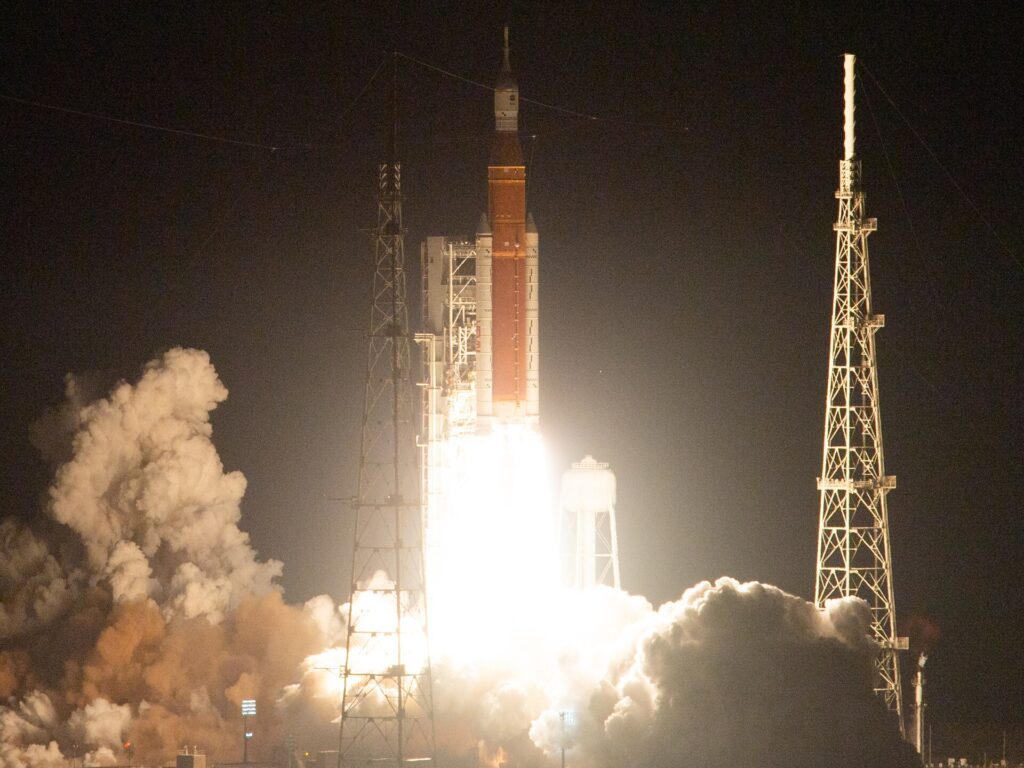
Space Launch System (SLS)
NASA's Moon rocket for Artemis: 98 m tall, 39,100 kN at liftoff — more…
Explore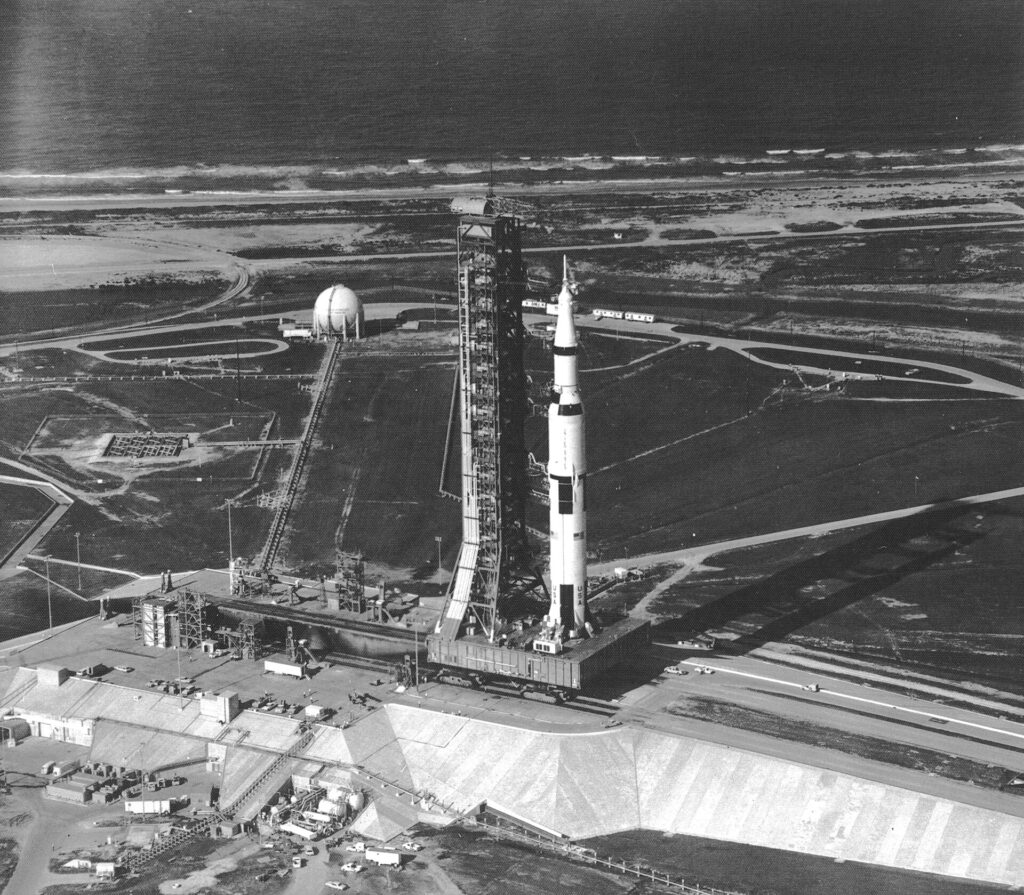
Saturn V
NASA's 110.6 m Moon rocket launched every Apollo lunar mission and Skylab, sending 140,000…
Explore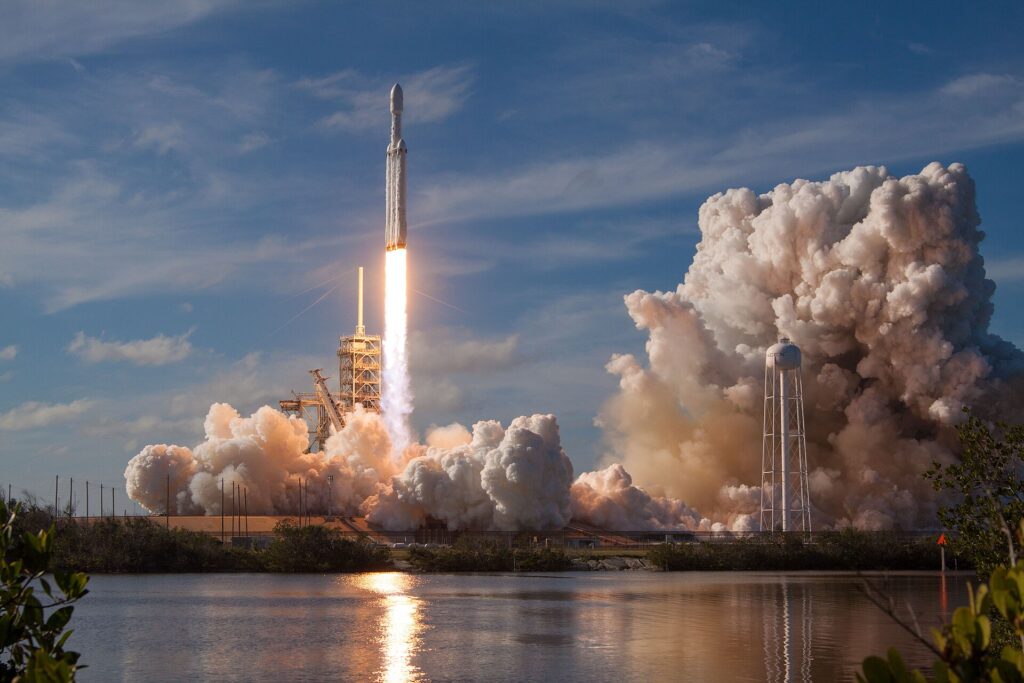
Falcon Heavy
SpaceX's triple-core heavy lifter: 27 engines, about 22,800 kN of thrust, and up to…
Explore
Ariane 6
Europe's new heavy-lift rocket, flying since July 2024: two or four boosters, up to…
Explore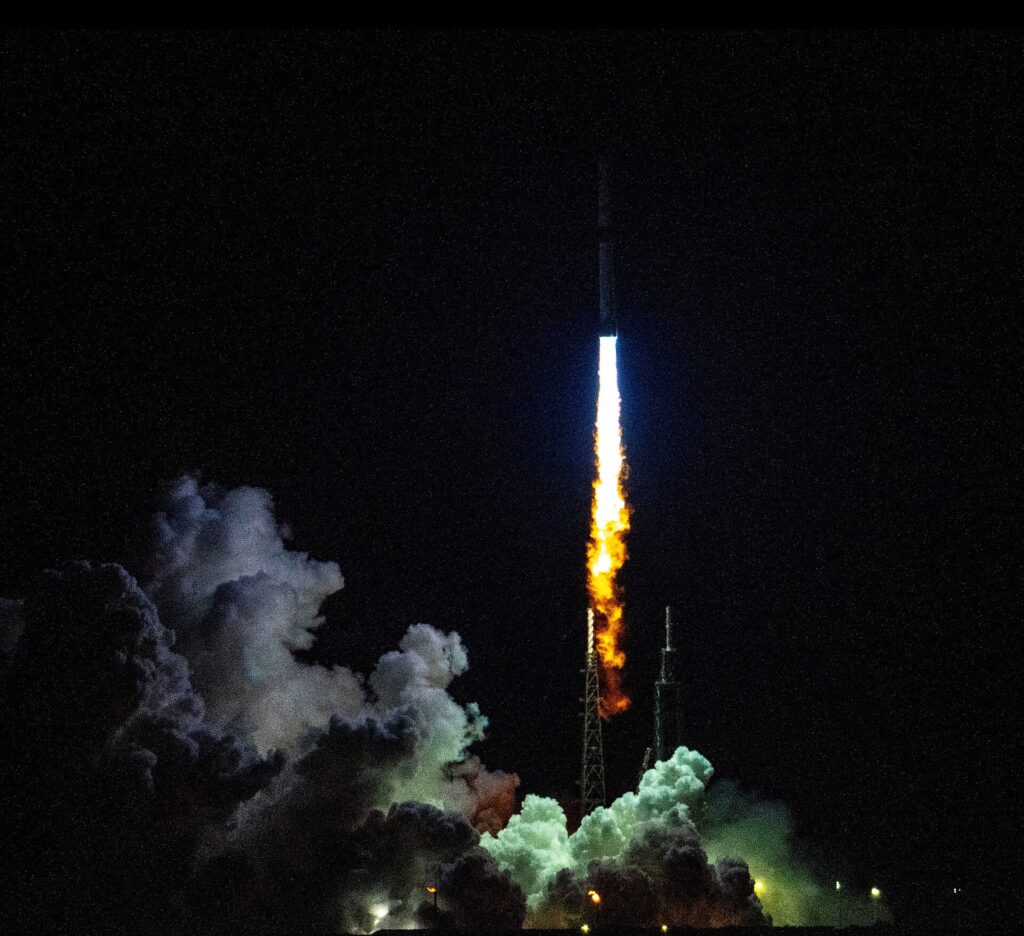
New Glenn
Blue Origin's 98 m partially reusable heavy rocket reached orbit on its January 2025…
Explore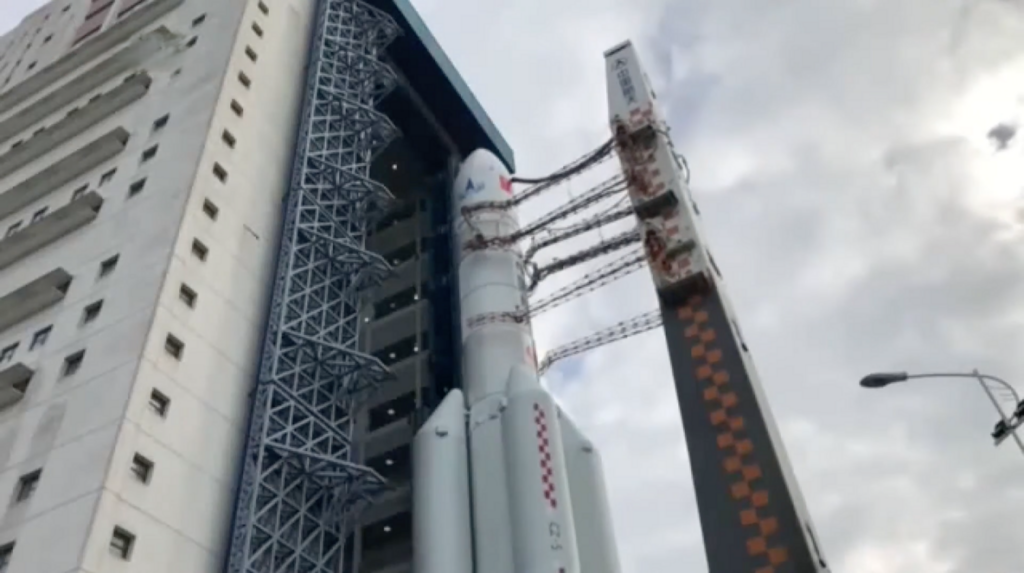
Long March 5
China's most powerful operational rocket lifts 25,000 kg to low Earth orbit and launched…
Explore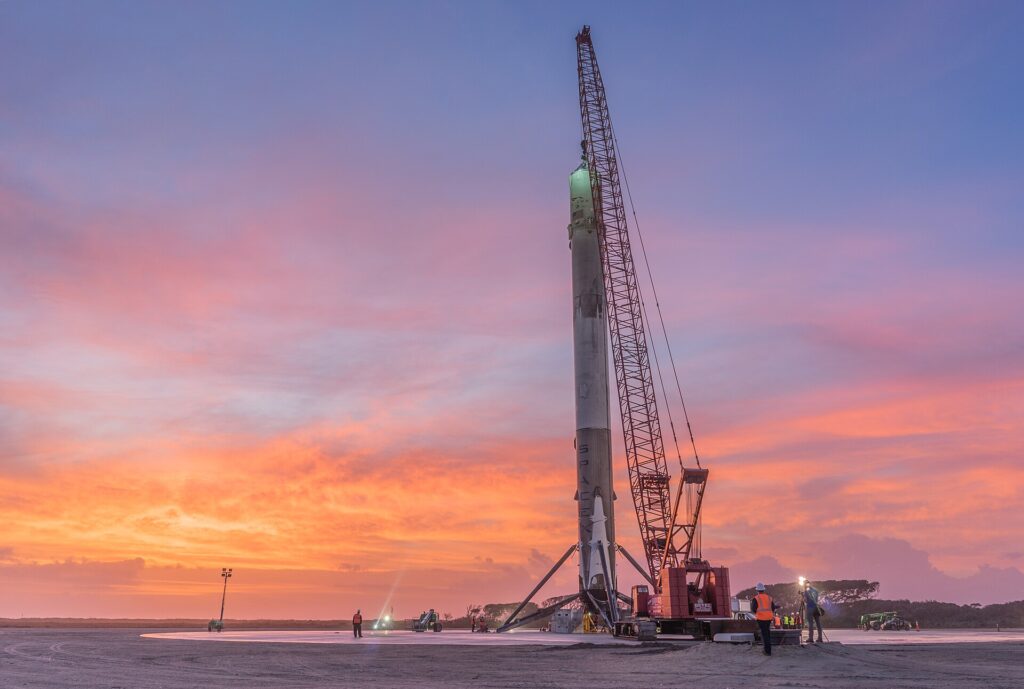
Falcon 9
SpaceX's partially reusable workhorse rocket: 70 m tall, 22,800 kg to low Earth orbit,…
Explore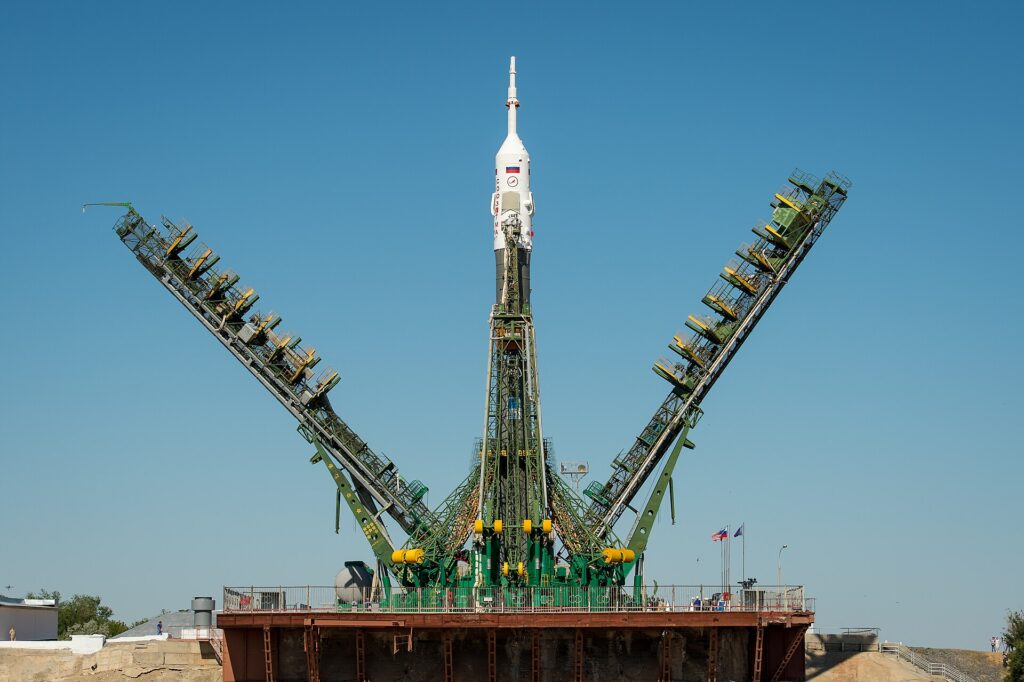
Soyuz-2
Modernized descendant of the world's first ICBM, flying since 2004: 46 m tall, 8,200…
Explore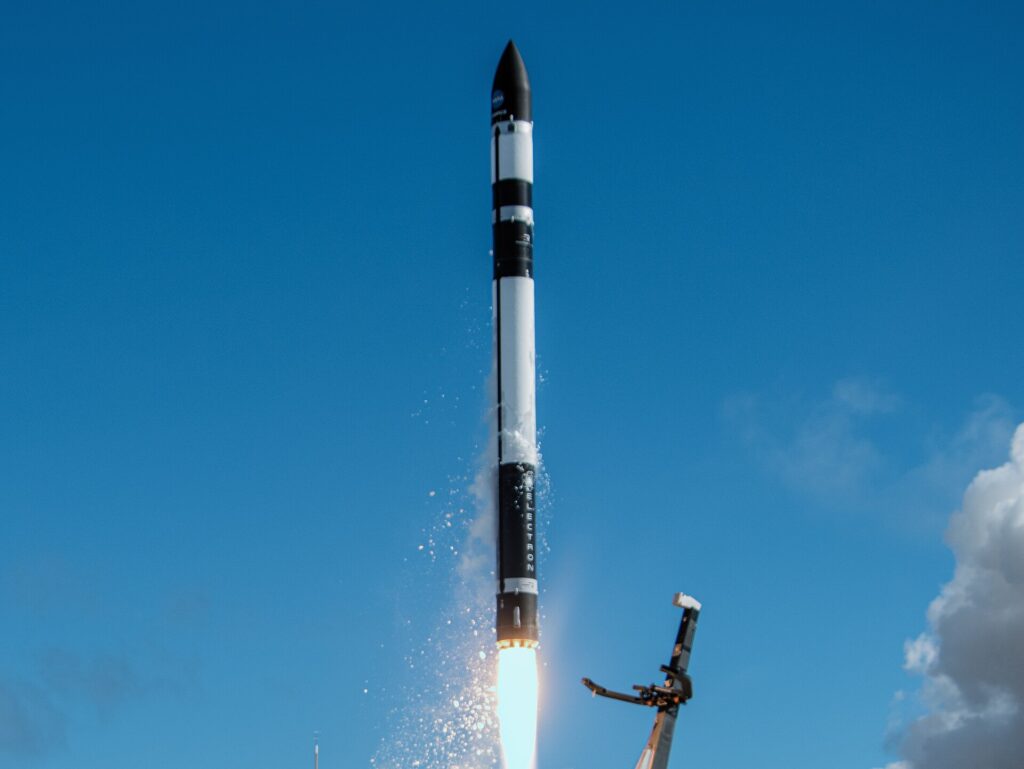
Electron
Rocket Lab's 18 m carbon-fiber small-satellite launcher lifts 300 kg to orbit with 3D-printed,…
Explore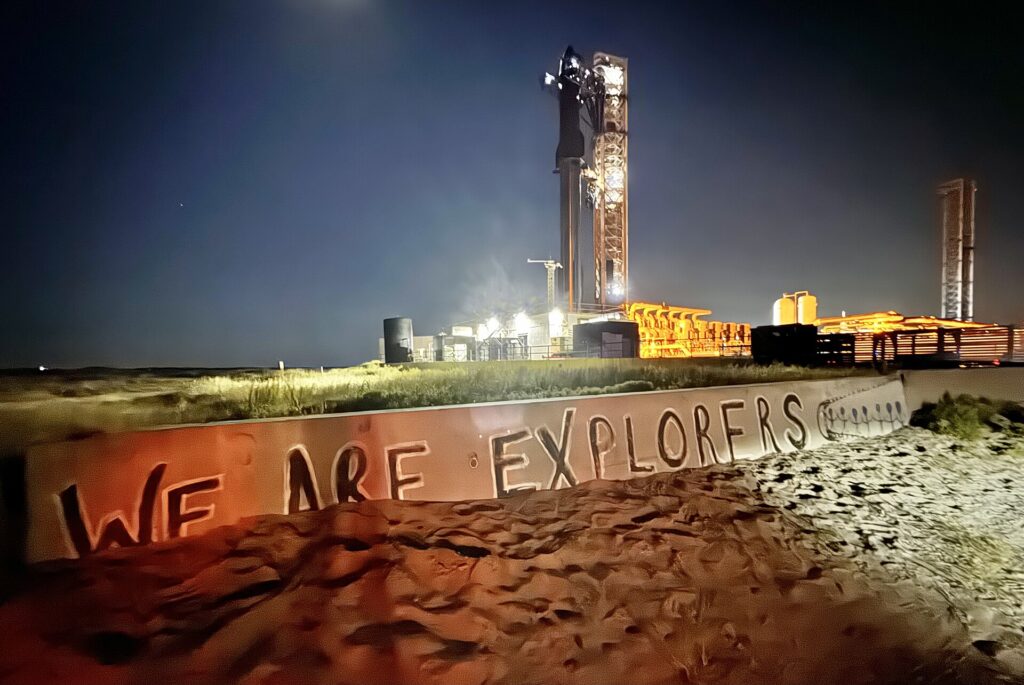
Starship
SpaceX’s two-stage launch system is designed for full reuse. V3 flight tests assess deployment,…
ExploreWhy Thrust Isn’t Everything
Thrust gets a rocket off the pad, but three quieter numbers decide whether it reaches orbit. Specific impulse (Isp) measures how efficiently an engine turns propellant into speed — hydrogen engines like the RS-25 reach around 450 seconds in vacuum, while kerosene engines sit near 300–340. Mass fraction is how much of the vehicle is propellant versus structure; every kilogram of dry mass is a kilogram of payload lost. And staging lets a rocket throw away dead weight mid-flight — an important way to make the required mass ratio practical for chemical launch vehicles.
That is why the thrust table above doesn’t simply rank capability. Saturn V supported lunar missions and also launched Skylab into Earth orbit. Electron operates at a much smaller scale and launches small satellites. These different missions cannot be ranked by liftoff thrust alone. The engineering story behind these trade-offs is told in our companion guide: How Rockets Work.
Frequently Asked Questions
What is the most powerful rocket ever built?
Starship / Super Heavy is a super heavy-lift system that has flown with thrust exceeding earlier launch vehicles. Its figures depend on the version. This guide does not reuse an early-test thrust or payload figure as the specification for every generation. See the Starship profile for the completed Flight 13 milestone, recovery results and official source.
How fast does a rocket need to go to reach orbit?
About 28,000 km/h (7.8 km/s) for a representative low Earth orbit; the exact speed depends on altitude. Local Mach number is not a useful vacuum speed unit. Reaching orbit is a speed problem, not an altitude problem: a rocket must accelerate sideways fast enough that as gravity pulls it down, the Earth’s surface curves away beneath it at the same rate.
Why do rockets have stages?
Because carrying empty tanks is wasted effort. Once a stage burns out, dropping it means the remaining engines accelerate a much lighter vehicle. The rocket equation makes single-stage-to-orbit marginal with chemical propulsion, so nearly every orbital rocket ever flown has used two or more stages.
Why are reusable rockets such a big deal?
An expendable rocket throws away hardware worth tens of millions of dollars every flight. Falcon 9 showed a first stage can land and fly again dozens of times, cutting launch prices and raising flight rates. Starship aims to reuse both stages, with the aim of further reducing cost per kilogram to orbit; the achieved economics depend on operations and reuse.
What is the fastest machine humans have ever built?
The Parker Solar Probe, which reaches about 692,000 km/h at its closest passes by the Sun — nearly 200 km every second. It got that speed from a rocket launch plus repeated Venus gravity assists, making it the fastest human-made object ever, far beyond any aircraft or orbital spacecraft.