Facts summary and sources
Saab 37 Viggen: AJS 37 published maximum: Mach 2 (Published specification). Historic Flight also lists 1,350 km/h indicated airspeed; that is not an equivalent true-airspeed conversion. First flight: 1967. 8 February 1967: original Viggen prototype. AJS-family upgrades followed in 1991–1997.
This is a secondary compilation. A source-check date applies only to the listed claim, not to the whole page or its translation. A page update is not a source check.
Sources and check records
- Saab: Saab 37 Viggen history — The first Viggen flew on 8 February 1967; deliveries began in 1971. [The first flight belongs to the original prototype, not the later AJS upgrade. Delivery is separate from an operational-readiness date.] · Event date: 1967-02-08 · Source checked for this claim: 2026-10-19
- Swedish Air Force Historic Flight: AJS 37 and SK 37E — The operator lists the AJS 37 maximum as Mach 2 or 1,350 km/h indicated airspeed. [Indicated airspeed and Mach are different measures; 1,350 is not entered as the equivalent true km/h speed. This is an operator specification, not a speed record.] · Source checked for this claim: 2026-10-19
- Swedish Air Force Historic Flight: AJS 37 and SK 37E — AJS 37 data: RM8A engine, 16.3 m length, 10.6 m span, 5.81 m height, 10,569 kg empty weight, 20,000 m service ceiling and 1,700 km range with internal fuel. [The listed 15,525 kg takeoff weight is not explicitly maximum takeoff weight. RM8A thrust is 6,690 kp dry and 11,790 kp with Zone III afterburner; converted using standard gravity. External-tank range is separately 2,100 km.] · Source checked for this claim: 2026-10-19
- Saab Finland: Saab 37 Viggen — Saab records withdrawal from active service in autumn 2005 and a family total of 337 aircraft. Its 2021 Swedish history instead gives 329. [The differing production totals are disclosed rather than silently reconciled. The 2005 date concerns active service; Historic Flight records later SK 37E military flying and current preserved aircraft.] · Source checked for this claim: 2026-10-19
- Swedish Air Force Historic Flight: AJS 37 and SK 37E — The first production AJ 37 was handed over on 21 June 1971; operational-unit conversion began in January 1973. AJ/SH/SF aircraft received AJS-family upgrades during 1991–1997. [AJS 37 uses RM8A; the JA 37 interceptor and its RM8B are a separate variant. Historic Flight operates preserved AJS 37 and SK 37E aircraft.] · Event date: 1971-06-21 · Source checked for this claim: 2026-10-19
✈️ Full Specifications
Reference: single-seat AJS 37, not RM8B-powered JA 37. Operator range is 1,700 km with internal fuel or 2,100 km with an external tank; neither is labelled combat radius. The operator lists 20,000 m service ceiling. Its 15,525 kg takeoff weight is not explicitly MTOW, so that field is blank. RM8A thrust converts from 6,690/11,790 kgf to about 65.61/115.62 kN, dry/Zone III afterburner. Saab gives 329 aircraft in its 2021 Swedish history and 337 in its Finnish history; Historic Flight also gives 337, so an exact production total is not chosen. First delivery was 1971 and unit conversion began 1973; service-entry year is not inferred from either. Retirement 2005 means active frontline service, with later SK 37E use and civilian preservation separate. Comparable unit cost is unverified.
| Designation | AJS 37 Viggen (specification reference) |
| Manufacturer | Saab |
| Country | ✈️ Sweden |
| First flight | 1967 |
| First-flight context | 8 February 1967: original Viggen prototype. AJS-family upgrades followed in 1991–1997. |
| Retired | 2005 |
| Crew | 1 |
| Length | 16.3 m (53.5 ft) |
| Wingspan | 10.6 m (34.8 ft) |
| Height | 5.81 m (19.1 ft) |
| Empty Weight | 10,569 kg (23,305 lb) |
| Max Speed (Mach) | 2 |
| AJS 37 published maximum | Mach 2 — Historic Flight also lists 1,350 km/h indicated airspeed; that is not an equivalent true-airspeed conversion. |
| Speed evidence basis | Published specification |
| Service Ceiling | 20,000 m (65,620 ft) |
| Range | 1,700 km (1,056 mi) |
| Engine | 1 × Volvo Flygmotor RM8A afterburning turbofan |
| Thrust (each) | Dry 65.61 kN · AB 115.62 kN |
🌐 Operators
🔁 Variants
- AJ 37 — attack
- SF/SH 37 — reconnaissance
- SK 37 — trainer
- JA 37 — interceptor with RM8B
- AJS family — upgraded attack/reconnaissance aircraft
- SK 37E — electronic-warfare training
⚔️ Armament
Overview
The Saab Viggen was designed for Sweden’s dispersed air bases. Its canard-delta layout, thrust reverser and rugged landing gear helped crews operate from short runways. A flight computer reduced the workload of the single pilot on attack missions.
One family, several missions
The first prototype flew on 8 February 1967. The first production AJ 37 was handed over in June 1971; operational-unit conversion began in January 1973. Attack and reconnaissance aircraft later received AJS-family upgrades. The JA 37 interceptor had different equipment and an RM8B engine.
AJS 37 performance
The numerical reference is the RM8A-powered AJS 37. Swedish Air Force Historic Flight lists Mach 2 and separately gives a 1,350 km/h indicated-airspeed limit. Indicated airspeed should not be substituted for true airspeed. Its range figures are 1,700 km on internal fuel and 2,100 km with an external tank.
Saab’s histories give different family totals: 329 on its Swedish page and 337 on its Finnish page. Historic Flight also gives 337. These sources do not establish an identical counting scope.
After military service
Saab dates withdrawal from active service to autumn 2005. SK 37E electronic-warfare aircraft had a later military history; Historic Flight now operates preserved AJS 37 and SK 37E examples.
Frequently Asked Questions
How fast was the AJS 37 Viggen?
Its current preservation operator publishes Mach 2. The separately listed 1,350 km/h is indicated airspeed and is not an equivalent true-airspeed conversion.
Did every Viggen use the same engine?
No. The AJS 37 reference uses RM8A, while the JA 37 interceptor used RM8B. Figures for the two variants should remain separate.
Did the Viggen enter service on its first flight?
No. The prototype flew in February 1967, the first production AJ 37 was delivered in June 1971, and operational-unit conversion began in January 1973.
Are any Viggens still flying?
Yes. Swedish Air Force Historic Flight operates preserved AJS 37 and SK 37E aircraft. Saab’s 2005 withdrawal date describes active military service, not the end of all Viggen flying.
Primary Sources
- Saab: Saab 37 Viggen history
- Swedish Air Force Historic Flight: AJS 37 and SK 37E
- Saab Finland: Saab 37 Viggen
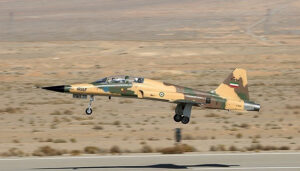 HESA Kowsar
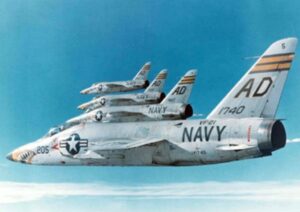 Grumman F-11 Tiger
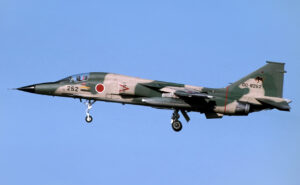 Mitsubishi F-1
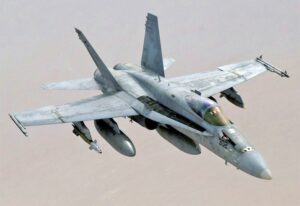 McDonnell Douglas F/A-18 Hornet
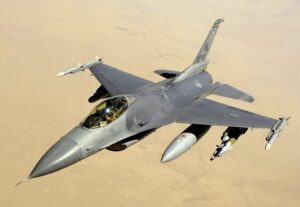 General Dynamics F-16 Fighting Falcon
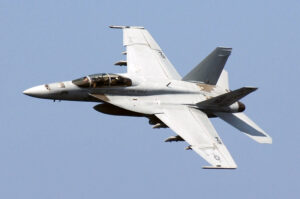 Boeing F/A-18E/F Super Hornet