Facts summary and sources
Boeing QF-16: speed field: Mach 2.0 (database value; evidence basis not recorded). First flight: 2013.
This is a secondary compilation. A source-check date applies only to the listed claim, not to the whole page or its translation. A page update is not a source check.
Sources and check records
- Wikipedia reference · Source-check date not recorded
✈️ Full Specifications
| Designation | QF-16 |
| Manufacturer | Boeing (converting General Dynamics / Lockheed Martin F-16 airframes) |
| Country | 🇺🇸 United States |
| First flight | 2013 |
| Service Entry | 2015 |
| Length | 15.0 m (49.2 ft) |
| Wingspan | 9.95 m (32.6 ft) |
| Height | 4.88 m (16 ft) |
| Empty Weight | 8,570 kg (18,897 lb) |
| Max Takeoff Weight | 19,200 kg (42,336 lb) |
| Max Speed (Mach) | 2 |
| Speed evidence basis | Published specification |
| Max Speed | 2,120 km/h (1,320 mph) |
| Service Ceiling | 15,240 m (50,002 ft) |
| Range | 4,200 km (2,608 mi) |
| Climb Rate | 254 m/s (50000 ft/min) |
| Engine | 1 × One Pratt & Whitney F100-PW-200/220/229 or General Electric F110-GE-100/129 afterburning turbofan (as originally fitted to the donor F-16) |
| Thrust (each) | Dry 79 kN · AB 129 kN |
🌐 Operators
🔁 Variants
- QF-16C — converted single-seat F-16C airframes used as full-scale aerial targets
- QF-16 (manned mode) — flown with a safety pilot for training, checkout and non-destructive presentation flights
⚔️ Armament
Overview
The Boeing QF-16 is an unmanned, remotely piloted conversion of the retired General Dynamics (later Lockheed Martin) F-16 Fighting Falcon. Developed for the United States Air Force as a Full-Scale Aerial Target (FSAT), it provides a genuinely fighter-representative, supersonic target for evaluating air-to-air and surface-to-air weapons and for training combat aircrews. Because it retains the flight envelope of the F-16 — including speeds beyond Mach 2 and sustained manoeuvres of up to about 9 g — the QF-16 presents a far more realistic threat than the subsonic QF-4 Phantom drones it replaced.
Design & Development
The QF-16 program grew out of the Air Force’s need to retire its dwindling stock of QF-4 target drones. Boeing was awarded the FSAT contract and converted stored F-16A/C airframes at Cecil Field in Jacksonville, Florida, installing remote-control, flight-termination and telemetry systems while leaving the basic airframe, engine and flight characteristics intact. Aircraft can be flown either with a safety pilot in the cockpit for checkout and ferry flights, or fully uncrewed from ground stations. A manned QF-16 first flew in 2012, and the first fully unmanned flight took place on 19 September 2013 over the Gulf of Mexico, demonstrating automatic take-off and landing, simulated manoeuvres and supersonic flight with no one aboard.
Operational History
The QF-16 achieved operational status in the mid-2010s and is operated primarily by the 82nd Aerial Targets Squadron at Tyndall Air Force Base, Florida, with test activity at Holloman Air Force Base, New Mexico. The Air Force contracted for up to roughly 126 conversions to sustain the target fleet over its service life. In its target role the aircraft is typically flown unarmed, though it can carry countermeasures and threat-representative pods, and it is frequently expended as a live-fire target for missiles such as the AIM-120 and AIM-9. By providing a true supersonic, high-g adversary, the QF-16 remains a key part of U.S. weapons testing and evaluation.
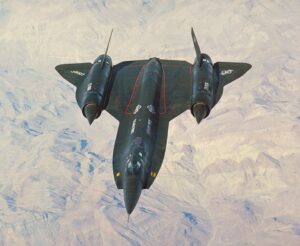 Lockheed YF-12
 Mikoyan MiG-1.44
 North American X-15
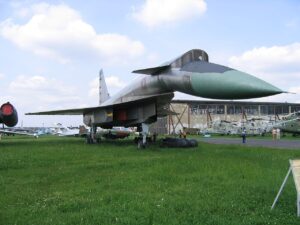 Sukhoi T-4 Sotka