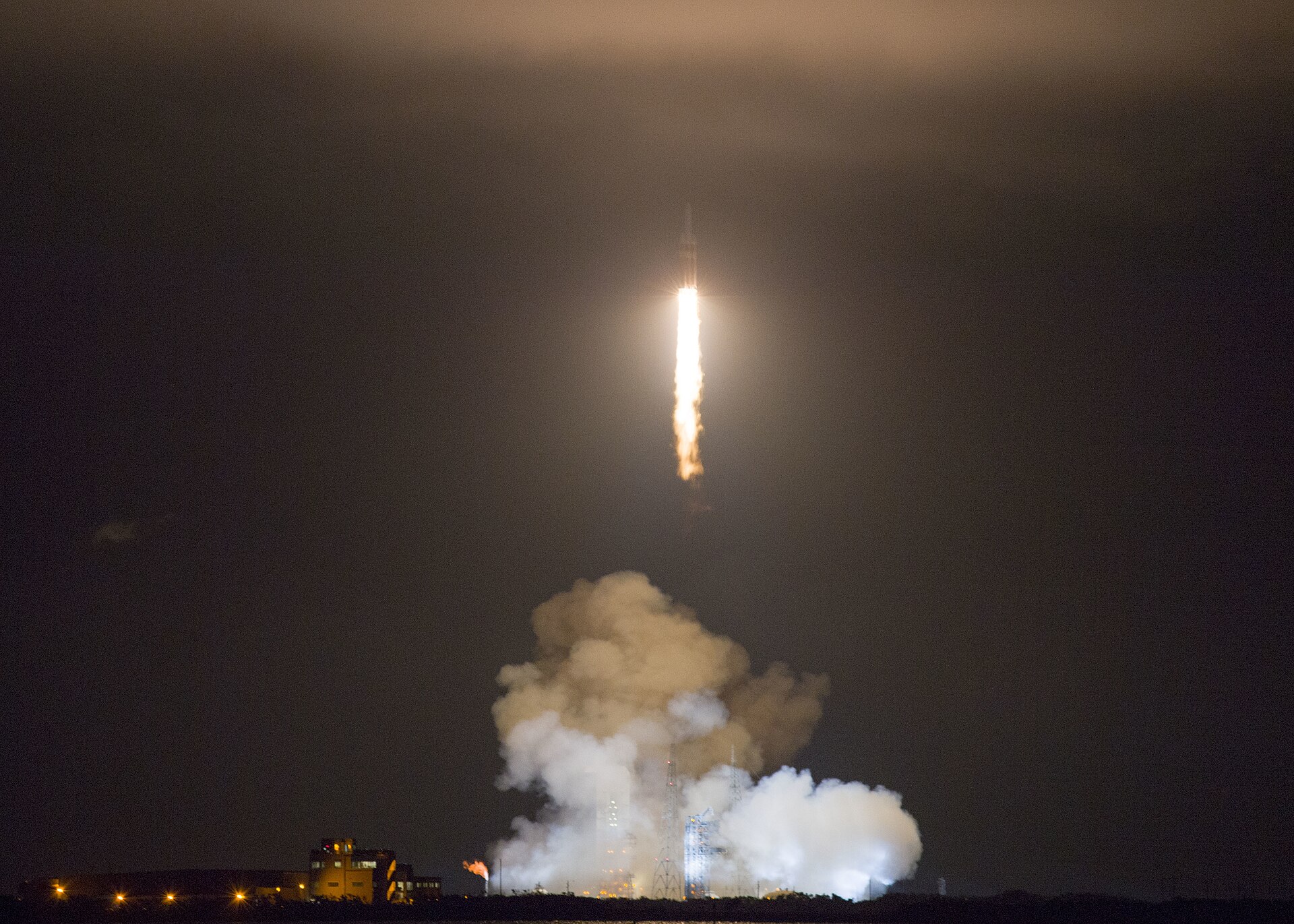
On June 8, 2026, NASA’s Parker Solar Probe completed its 28th close pass of the Sun, once again diving through the corona at about 692,000 km/h (430,000 mph) and coming within 3.8 million miles of the solar surface. It matched the record it first set in December 2024 — keeping its title as the fastest human-made object measured relative to the Sun.
692,000 km/h — the fastest thing we’ve ever made
Parker did not reach this speed solely through its launch rocket’s direct acceleration. Parker got there by flying past Venus seven times, using each pass to shrink its orbit, and then letting the Sun’s immense gravity accelerate it as it fell toward its closest approach. At perihelion it is moving roughly 192 kilometres every second — fast enough to cross the United States in about 25 seconds. We break down exactly how that compares to rockets, aircraft and other spacecraft on our Orbital Speed Records page.
Touching the Sun
Speed is a side effect; the science is the point. Wrapped in a carbon-composite heat shield, the Parker Solar Probe flies closer to the Sun than any spacecraft in history, sampling the solar wind and magnetic fields from inside the corona itself. Those measurements are helping scientists understand why the Sun’s outer atmosphere is hundreds of times hotter than its surface, and how space weather that can disrupt satellites and power grids is born.
A record that keeps repeating
After its final Venus flyby, Parker’s orbit brought it to similar close-approach conditions on subsequent passes in 2025 and 2026, allowing it to match its record. Future records depend on orbital geometry, thermal protection and propulsion design; the current record does not guarantee that no other mission can exceed it.
Image: NASA / Johns Hopkins APL / U.S. Naval Research Laboratory (public domain).
See where the Parker Solar Probe ranks among the fastest machines ever built on our Orbital Speed Records page.