Facts summary and sources
Lockheed A-12 OXCART: Reported peak test speed: Mach 3.29 (Reported flight result). CIA’s 1965 flight-test result; not a conversion from a sea-level speed of sound. First flight: 1962. 26 April 1962: first extended test flight; 30 April: official first flight, after a short hop on 25 April.
This is a secondary compilation. A source-check date applies only to the listed claim, not to the whole page or its translation. A page update is not a source check.
Sources and check records
- CIA: Archangel, second edition (2012) — The history reports peak Mach 3.29 and 90,000 ft, reached by separate aircraft in May and August 1965. [Pages 21 and 48–49 distinguish testing milestones. This is a reported flight result, not a certified comparison with SR-71 records or a fixed km/h conversion. The timeline compresses the speed and altitude into one entry.] · Source checked for this claim: 2026-10-19
- CIA: A-12 first-flight account — A short hop occurred on 25 April 1962, a roughly 40-minute test flight on 26 April, and the official first flight on 30 April. [Pages 16–17 and the timeline. The 30 April flight was witnessed by CIA and Air Force officials; it was not a public press flight.] · Event date: 1962-04-26 · Source checked for this claim: 2026-10-19
- CIA: Directorate of Science and Technology history, OXCART — Fifteen aircraft were purchased: twelve single-seat aircraft, one trainer and two aircraft configured for the TAGBOARD drone program. [Pages 295–296 explicitly include the trainer and two drone carriers in the fifteen. The three YF-12As are a separate program.] · Source checked for this claim: 2026-10-19
- CIA Museum: A-12 OXCART — BLACK SHIELD ran from May 1967 to May 1968, with 29 missions over East Asia. CIA describes nine of the fifteen OXCART aircraft as remaining. [The Archangel inventory, page 50, identifies six accident losses including one M-21. Its mission table includes North Vietnam, North Korea, Cambodia and Laos. The final aircraft flight was 21 June 1968. Exact final mission day is left unspecified because the narrative says 8 May while the timeline/table says 6 May.] · Source checked for this claim: 2026-10-19
✈️ Full Specifications
The speed field uses the CIA-reported Mach 3.29 test result. The 90,000 ft (27,432 m) milestone is an attained altitude, not an independently specified service ceiling. A comparable range, dimensions, weight categories and thrust regime were not established by the cited evidence, so those numerical fields remain unknown. Production totals fifteen OXCART airframes, including one trainer and two M-21s; reconnaissance aircraft had one pilot. Operational missions began in 1967, after readiness testing in 1965.
| Designation | A-12 reconnaissance aircraft; OXCART production total |
| Manufacturer | Lockheed Skunk Works |
| Country | 🇺🇸 United States |
| First flight | 1962 |
| First-flight context | 26 April 1962: first extended test flight; 30 April: official first flight, after a short hop on 25 April. |
| Service Entry | 1967 |
| Retired | 1968 |
| Crew | 1 |
| Max Speed (Mach) | 3.29 |
| Reported peak test speed | Mach 3.29 — CIA’s 1965 flight-test result; not a conversion from a sea-level speed of sound. |
| Speed evidence basis | Reported flight result |
| Engine | 2 × Pratt & Whitney J58 turbojet; early tests used J75s |
| Production | 15 |
🌐 Operators
🔁 Variants
- A-12 — twelve single-seat airframes
- A-12 trainer — one two-seat airframe
- M-21 — two drone carriers included in the OXCART total
- YF-12A — three interceptors counted separately
⚔️ Armament
Overview
The Lockheed A-12 OXCART was the CIA’s single-seat, high-altitude reconnaissance aircraft. It grew out of the GUSTO competition and became the starting point for the YF-12, M-21 and SR-71 family.
Flight testing and speed
After a short hop on 25 April 1962, test pilot Lou Schalk completed a longer flight on 26 April. The official first flight followed on 30 April, witnessed by CIA and Air Force officials.
Titanium construction and the J58 propulsion system made sustained Mach 3 flight possible. Early aircraft flew with substitute J75 engines; the first flight with two J58s was on 15 January 1963. CIA’s detailed history reports Mach 3.29 and 90,000 ft as peaks reached by different aircraft in May and August 1965.
BLACK SHIELD
Three aircraft deployed to Kadena, Okinawa. From May 1967 to May 1968, BLACK SHIELD flew 29 reconnaissance missions over East Asia, including North Vietnam, North Korea, Cambodia and Laos. Photographs located the captured USS Pueblo and documented military facilities.
Production and retirement
CIA’s total of 15 OXCART aircraft includes 12 single-seat machines, one trainer and two M-21 drone carriers. Its inventory lists six accident losses, including one M-21, leaving nine airframes. The three YF-12As belong to a separate production count.
The final A-12 flight to storage took place on 21 June 1968. The SR-71 continued the reconnaissance role with a different crew and sensor arrangement; their published speeds and record flights require separate context.
Frequently Asked Questions
How fast did the A-12 fly?
CIA’s detailed history reports Mach 3.29 in 1965. The 90,000 ft altitude milestone was reached by a different aircraft; these are reported test results, not a fixed conversion to km/h.
When was the A-12’s first flight?
A short hop occurred on 25 April 1962, a longer test flight on 26 April, and the official first flight on 30 April.
Why do A-12 production totals differ?
CIA’s fifteen-aircraft total includes twelve single-seat aircraft, one trainer and two M-21 drone carriers. It excludes the three YF-12A interceptors.
Were all 29 BLACK SHIELD missions over North Vietnam?
No. The CIA mission table also includes North Korea, Cambodia and Laos. Operations ran from May 1967 to May 1968.
Primary sources
- CIA: Archangel, second edition (2012)
- CIA: A-12 first-flight account
- CIA: Directorate of Science and Technology history, OXCART
- CIA Museum: A-12 OXCART
Related Aircraft
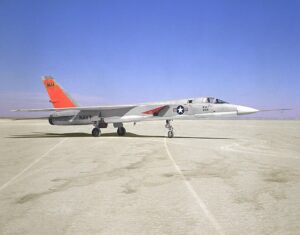 North American A-5 VigilanteMach 2.0 · 2,123 km/h
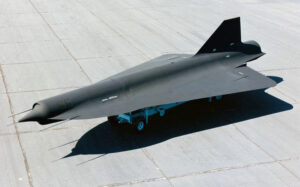 Lockheed D-21Mach 3.35 · 3,600 km/h
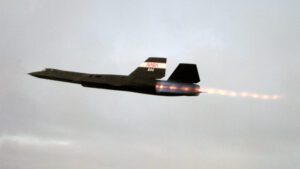 Lockheed Martin SR-72 Son of BlackbirdMach 6.0 [projected]
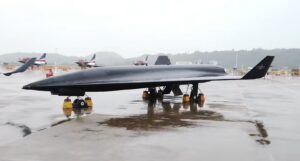 AVIC WZ-8Mach 3 · 3,704 km/h
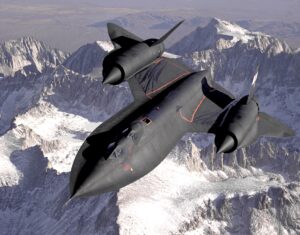 Lockheed SR-71 BlackbirdMach 3.3 · 3,530 km/h