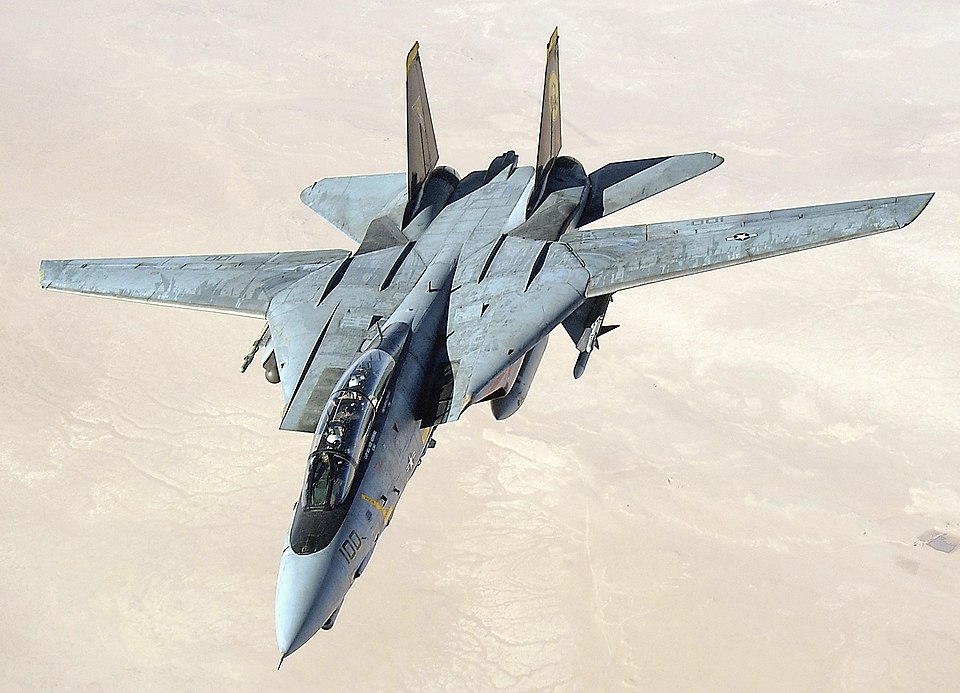
Most fighter jets can fly faster than the speed of sound — but only in short bursts, with their afterburners blazing. Supercruise is the ability to sustain supersonic flight without afterburners, and only a handful of aircraft in history have been able to do it.
Why Afterburners Are a Problem
An afterburner (or reheat) works by injecting raw fuel into the hot exhaust of a jet engine and igniting it. This produces a massive thrust boost — often 50% or more — but at a terrible cost:
- Fuel consumption triples or more when afterburners are lit
- Range drops dramatically — you’re burning through fuel at an enormous rate
- Infrared signature skyrockets — the glowing exhaust plume makes you an easy target for heat-seeking missiles
- Engine wear increases significantly
This means most “supersonic” fighters can only go supersonic for minutes at a time before they need to slow down or risk running out of fuel. In combat, this severely limits tactical options.
How Supercruise Works
A supercruise-capable aircraft can sustain Mach 1+ using only its engine’s dry thrust (military power, no afterburner). This requires a combination of:
- Extremely efficient engines with high thrust-to-weight ratios
- Low aerodynamic drag — clean airframe design optimized for supersonic flight
- Favorable altitude — supercruise typically works best at high altitudes (40,000+ feet) where air density is lower
Aircraft That Can Supercruise
| Aircraft | Supercruise Speed | Notes |
|---|---|---|
| Concorde | Mach 2.04 | Sustained supercruise for hours across the Atlantic. Holds record for most supersonic flight time of any Western aircraft. |
| F-22 Raptor | Mach 1.5+ | The benchmark military supercruiser. Can sustain Mach 1.5+ in combat configuration with weapons. |
| Eurofighter Typhoon | Mach 1.5 | EUROJET lists this with a full air-to-air missile fit; the page does not specify altitude or temperature. |
| Dassault Rafale | Not specified here | The cited Dassault specifications do not establish a supercruise speed and configuration, so no precise value is assigned in this table. |
| Gripen E | Mach 1.1+ | Claimed supercruise with the F414G engine. |
| English Electric Lightning | Mach 1.0+ | One of the first aircraft to exceed Mach 1 in level flight without afterburner (1954). |
Why Supercruise Matters in Combat
Supercruise gives a fighter pilot enormous tactical advantages:
- Sustained supersonic flight: Fly supersonically without continuous afterburner use, subject to fuel, altitude and aircraft configuration
- Extended range: Cover more distance at supersonic speed without guzzling fuel
- Lower detectability: No afterburner plume means a much smaller infrared signature
- Missile kinematics: Launching missiles at supersonic speed adds the aircraft’s velocity to the missile’s, extending effective range
- Energy advantage: Always having excess speed means better ability to maneuver and dictate the fight
This is why supercruise was a mandatory requirement for the F-22 Raptor and is expected to be a key feature of 6th-generation fighters like the F-47.
Compare supercruise-capable aircraft on our Speed Comparison chart.
References
- Heiser, W.H. & Mattingly, J.D. (2010). Supercruise Aircraft Range. Journal of Aircraft, 47(3). DOI: 10.2514/1.46129
- Heiser, W.H. & Pratt, D.T. (1994). Hypersonic Airbreathing Propulsion. AIAA Education Series. DOI: 10.2514/4.470356
- Fry, R.S. (2004). A Century of Ramjet Propulsion Technology Evolution. Journal of Propulsion and Power, 20(1), 27-58. DOI: 10.2514/1.9178