Facts summary and sources
AIDC F-CK-1 Ching-Kuo: Published maximum speed: Mach 1.6 (Published specification). Current ROCAF IDF specification; altitude and load unspecified. First flight: 1989. Original IDF: 28 May 1989. C/D development aircraft first flew in 2006 and 2007.
This is a secondary compilation. A source-check date applies only to the listed claim, not to the whole page or its translation. A page update is not a source check.
Sources and check records
- AIDC: IDF first-flight 28th anniversary, 19 May 2017 — The IDF rolled out on 10 December 1988 and first flew on 28 May 1989, flown by Wu Kang-ming. [Manufacturer anniversary account for the original IDF, separate from later C/D development aircraft.] · Event date: 1989-05-28 · Source checked for this claim: 2026-10-19
- Republic of China Air Force: IDF specifications, updated 9 September 2026 — The operator publishes maximum speed Mach 1.6, maximum range 1,020 nautical miles, service ceiling 51,500 ft, maximum takeoff weight 27,600 lb, dimensions 46 by 31 by 15 ft, and two TFE1042-70 turbofans. [General IDF operator figures with no specific fuel, load or test-altitude condition. Dimensions and metric values are approximate conversions of rounded figures. The ambiguous adjacent speed text 600 nautical miles is not treated as a speed unit, and no Mach conversion is made.] · Event date: 2026-09-09 · Source checked for this claim: 2026-10-19
- AIDC: F-CK-1 C/D Hsiang Sheng development — The 2001–2007 Hsiang Sheng program produced two development aircraft. The single-seat aircraft first flew on 4 October 2006 and the two-seat aircraft on 14 March 2007. AIDC identifies upgraded GD-53 radar, digital avionics, 32-bit flight control and prototype conformal tanks. [Development-aircraft equipment is distinct from the later fleet upgrade. Upgraded GD-53 does not establish AESA radar, and prototype conformal tanks are not evidence of a fleet-wide fit.] · Source checked for this claim: 2026-10-19
- Office of the President: First Hsiang Chan upgraded IDF delivery, 30 June 2011 — The presidential record documents the first Hsiang Chan upgraded-aircraft delivery ceremony on 30 June 2011. [Contemporaneous government event record; the fleet upgrade had begun well before 2017.] · Event date: 2011-06-30 · Source checked for this claim: 2026-10-19
- AIDC: Last upgraded IDF delivery, 18 October 2018 — AIDC reports the final delivery on 18 October 2018, including two former NCSIST prototype aircraft brought to the upgraded configuration. It describes completion of the fleet enhancement and dates A/B service entry to 1992. [The final two aircraft were upgraded prototypes, not two newly built series aircraft. The current Air Force page dates Hsiang Chan to 2010–2018 and deliveries from 1992.] · Event date: 2018-10-18 · Source checked for this claim: 2026-10-19
- Ministry of Economic Affairs: AIDC business history, page 36 — The ministry account records completion of 130 series-production IDF aircraft on 14 January 2000. [Government business-history account; 130 counts series aircraft, not every original or later development prototype. AIDC separately dates production completion to 1999, so manufacturing completion and this recorded completion milestone should not be treated as an identical event.] · Event date: 2000-01-14 · Source checked for this claim: 2026-10-19
- Ministry of National Defense: IDF delivery chronology, 23 February 2016 — The Air Force account dates the first lead-in aircraft handover to 14 February 1992 and series-production deliveries to January 1994. [Early lead-in service and subsequent series deliveries are distinct milestones. The page also contains an inconsistent 1998 first-flight year, which is not used; AIDC independently confirms 28 May 1989.] · Event date: 2016-02-23 · Source checked for this claim: 2026-10-19
✈️ Full Specifications
IDF family; published performance follows the current ROCAF page, which does not identify an individual A/B or upgrade configuration. Maximum speed is Mach 1.6; no fixed km/h or mph conversion is supplied. Maximum range 1,020 international nautical miles equals 1,889.04 km (stored rounded to 1,889 km), not combat radius. Rounded operator dimensions 46/31/15 ft become approximately 14.02/9.45/4.57 m; 51,500 ft ceiling is approximately 15,697 m and 27,600 lb maximum takeoff weight approximately 12,519 kg. Fuel, payload and test-altitude conditions are unspecified. The source does not unambiguously give per-engine thrust, so thrust fields remain empty. Crew varies between single- and two-seat configurations. AIDC dates early service entry to 1992; the MND delivery chronology distinguishes lead-in handover in February 1992 from series deliveries starting in January 1994. Production count 130 refers to series aircraft, excluding development prototypes; the 2018 final upgrade included two former prototypes.
| Designation | F-CK-1 / IDF family (ROCAF published reference) |
| Manufacturer | Aerospace Industrial Development Corporation (AIDC) |
| Country | 🇹🇼 Taiwan |
| First flight | 1989 |
| First-flight context | Original IDF: 28 May 1989. C/D development aircraft first flew in 2006 and 2007. |
| Service Entry | 1992 |
| Length | 14.02 m (46 ft) |
| Wingspan | 9.45 m (31 ft) |
| Height | 4.57 m (15 ft) |
| Max Takeoff Weight | 12,519 kg (27,604 lb) |
| Max Speed (Mach) | 1.6 |
| Published maximum speed | Mach 1.6 — Current ROCAF IDF specification; altitude and load unspecified |
| Speed evidence basis | Published specification |
| Service Ceiling | 15,697 m (51,502 ft) |
| Range | 1,889 km (1,173 mi) |
| Engine | 2 × TFE1042-70 afterburning turbofan |
| Production | 130 |
🌐 Operators
🔁 Variants
- F-CK-1A/B — original IDF family
- F-CK-1C/D Hsiang Sheng — two development aircraft, first flown in 2006/2007
- Hsiang Chan — fleet performance upgrade carried out in 2010–2018; development aircraft were subsequently brought into service
⚔️ Armament
Overview
The F-CK-1 Ching-Kuo, or Indigenous Defence Fighter (IDF), is Taiwan’s locally developed twin-engine fighter. The original aircraft first flew on 28 May 1989. Its history includes the original A/B fleet, two Hsiang Sheng C/D development aircraft and the later Hsiang Chan fleet upgrade.
Published Air Force performance
The current Republic of China Air Force page gives a maximum of Mach 1.6 and a 1,020 nautical-mile maximum range, approximately 1,889 km. It does not state the fuel, load or altitude conditions. The same reference gives a 51,500 ft service ceiling and 27,600 lb maximum takeoff weight. These are general operator specifications, not independently measured records or a common combat radius.
Prototypes and production
AIDC records the original rollout in December 1988. The Air Force dates deliveries from 1992, and AIDC uses that year for early A/B service. The defence ministry’s delivery chronology is more specific: a lead-in aircraft was handed over in February 1992, while series-production deliveries began in January 1994. The economic ministry records completion of 130 series aircraft in January 2000. That count excludes development prototypes; AIDC’s separate history dates manufacturing completion to 1999.
From Hsiang Sheng to Hsiang Chan
AIDC’s Hsiang Sheng program developed two C/D aircraft: the single-seat prototype first flew on 4 October 2006 and the two-seat aircraft on 14 March 2007. Their features included upgraded GD-53 radar, new digital avionics and flight controls; prototype conformal tanks should not be assumed on the operational fleet. The Air Force dates Hsiang Chan to 2010–2018. The first upgraded batch was handed over on 30 June 2011, and the final delivery on 18 October 2018 included the two former development aircraft. AIDC’s upgrade description supports improvements to GD-53, not a claim that the fleet received AESA radar.
Frequently Asked Questions
When did the F-CK-1 first fly?
The original IDF first flew on 28 May 1989. The later single- and two-seat Hsiang Sheng development aircraft first flew in October 2006 and March 2007 respectively.
How fast and how far can the IDF fly?
The current ROCAF reference gives Mach 1.6 and maximum range 1,020 nautical miles, approximately 1,889 km. Load and flight conditions are not stated; that range is not combat radius.
Did the fleet upgrade begin in 2017?
No. The Air Force dates Hsiang Chan to 2010–2018, and the first upgraded batch was delivered in June 2011. Final delivery in October 2018 included two former development aircraft.
Does the F-CK-1 upgrade mean AESA radar and AIM-120?
The cited AIDC description specifies upgraded GD-53 radar, and the Air Force lists TC-I, AIM-9P4 and TC-II missiles. Those sources do not establish fleet-wide AESA radar or AIM-120 integration.
Sources and scope
- AIDC: IDF first-flight 28th anniversary, 19 May 2017
- Republic of China Air Force: IDF specifications, updated 9 September 2026
- AIDC: F-CK-1 C/D Hsiang Sheng development
- Office of the President: First Hsiang Chan upgraded IDF delivery, 30 June 2011
- AIDC: Last upgraded IDF delivery, 18 October 2018
- Ministry of Economic Affairs: AIDC business history, page 36
- Ministry of National Defense: IDF delivery chronology, 23 February 2016
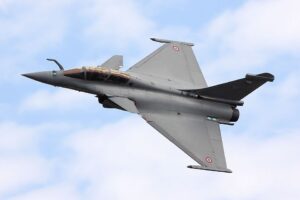 Dassault Rafale
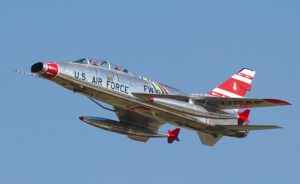 North American F-100 Super Sabre
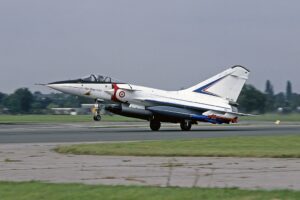 Dassault Mirage 4000
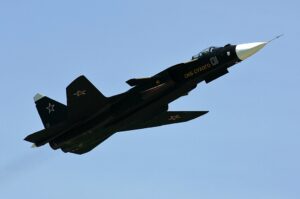 Sukhoi Su-47 Berkut
 Shenyang J-16
 Sukhoi Su-75 Checkmate