Facts summary and sources
Lockheed D-21: speed field: Mach 3.35 (database value; evidence basis not recorded). First flight: 1964.
This is a secondary compilation. A source-check date applies only to the listed claim, not to the whole page or its translation. A page update is not a source check.
Sources and check records
- Wikipedia reference · Source-check date not recorded
✈️ Full Specifications
| Designation | D-21 (Tagboard) |
| Manufacturer | Lockheed Corporation (Skunk Works) |
| Country | 🇺🇸 United States |
| First flight | 1964 |
| Service Entry | 1969 |
| Retired | 1971 |
| Length | 13.06 m (42.8 ft) |
| Wingspan | 5.80 m (19 ft) |
| Height | 2.14 m (7 ft) |
| Max Takeoff Weight | 4,990 kg (11,003 lb) |
| Max Speed (Mach) | 3.35 |
| Speed evidence basis | Published specification |
| Max Speed | 3,600 km/h (2,237 mph) |
| Service Ceiling | 29,000 m (95,149 ft) |
| Range | 5,600 km (3,478 mi) |
| Engine | 1 × Marquardt RJ43-MA-20S4 ramjet |
| Thrust (each) | Dry 6.7 kN |
| Production | 38 |
🌐 Operators
🔁 Variants
- D-21 — Original air-launched variant carried on the back of the M-21 (a two-seat A-12 derivative); launched at high speed and altitude.
- D-21B — Modified variant with an attachment point beneath the wing of a B-52H, boosted to ramjet ignition speed by a large solid-propellant rocket after air-drop.
⚔️ Armament
Overview
The Lockheed D-21 was an unmanned, Mach 3-plus reconnaissance drone developed in secret by Lockheed’s Skunk Works during the height of the Cold War. Powered by a single Marquardt RJ43 ramjet, it was designed to overfly hostile territory at extreme speed and altitude, capture imagery, and eject its camera payload for mid-air recovery while the drone self-destructed. It carried no weapons — its sole mission was strategic photo-reconnaissance in airspace considered too dangerous for a crewed aircraft.
Design & Development
Work on the drone began in October 1962 under the project name Tagboard, with Lockheed awarded a full development contract in March 1963. Originally designated Q-12, it was renamed D-21 (“Daughter”) to distinguish it from the “-12” designations proliferating across the A-12 Blackbird family; its carrier aircraft became the M-21 (“Mother”). Sharing chined, blended construction and materials with the Blackbird, the D-21 first flew on 22 December 1964. After a fatal launch accident destroyed an M-21 in 1966, the program shifted to the D-21B variant, which was carried and dropped from a B-52H and accelerated to ramjet ignition speed by a large solid-propellant booster rocket. About 38 airframes were built.
Operational History
The D-21B entered operational service in 1969 under Operation Senior Bowl, flying missions over the People’s Republic of China to gather intelligence on nuclear test facilities. Four operational sorties were flown between 1969 and 1971, but none successfully returned usable imagery — payloads were lost or the drones failed to complete their programmed routes. With mounting failures and the thaw in U.S.–China relations, the program was cancelled in 1971. Surviving airframes were placed in storage, and several D-21s are today preserved in U.S. aviation museums.
Related Aircraft
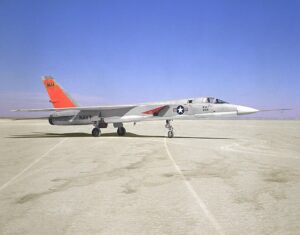 North American A-5 VigilanteMach 2.0 · 2,123 km/h
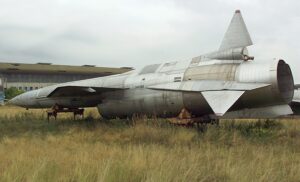 Tupolev Tu-123 YastrebMach 2.3 · 2,700 km/h
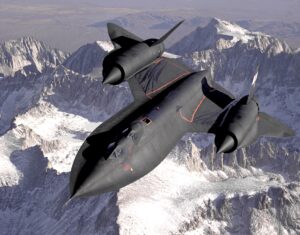 Lockheed SR-71 BlackbirdMach 3.3 · 3,530 km/h
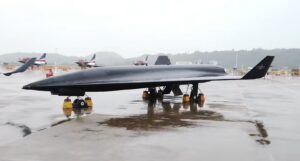 AVIC WZ-8Mach 3 · 3,704 km/h
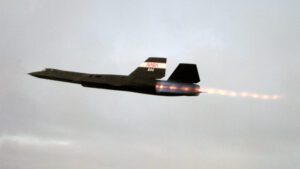 Lockheed Martin SR-72 Son of BlackbirdMach 6.0 [projected]Convair KingfishConvair Kingfish never flew. Explore its Mach 3.2 design cruise, the difference from FISH...