Every air-to-air and air-to-ground missile fired in anger begins with a simple engineering problem shared by every modern missile system: how does the weapon find its target? The answer lies in the seeker head, a small but extraordinarily sophisticated package of sensors, processors, and algorithms mounted in the nose of the missile. Understanding missile seekers is understanding how modern air combat actually works.
Seeker technology has evolved from crude heat-seeking elements in the 1950s to today’s imaging infrared seekers and active radar seekers that can track maneuvering fighters through clouds, chaff, and flares. Each seeker type has strengths, weaknesses, and tactical implications that shape how pilots employ their weapons.
The Four Main Seeker Families
Most modern missile seekers fall into four categories: infrared, semi-active radar, active radar, and passive anti-radiation. Each works on a different physical principle and each dominates a different role in air combat and strike operations.
Infrared seekers detect heat. Semi-active radar homes on radar energy reflected off the target after being transmitted by the launching aircraft. Active radar carries its own small radar on board the missile. Passive anti-radiation seekers find and destroy enemy radar emitters by tracking their own transmissions back to the source.
There are also less common types, including television and laser guidance for some air-to-ground weapons, and dual-mode seekers that combine two sensors for robustness. But the big four drive nearly all modern missile design.
How Infrared Seekers Lock On
An infrared seeker is essentially a camera that sees in the thermal spectrum. Modern imaging infrared seekers use focal-plane arrays with thousands of pixels, giving them enough resolution to distinguish an aircraft from a flare, recognize a specific target shape, and even pick a specific point on the airframe to strike.
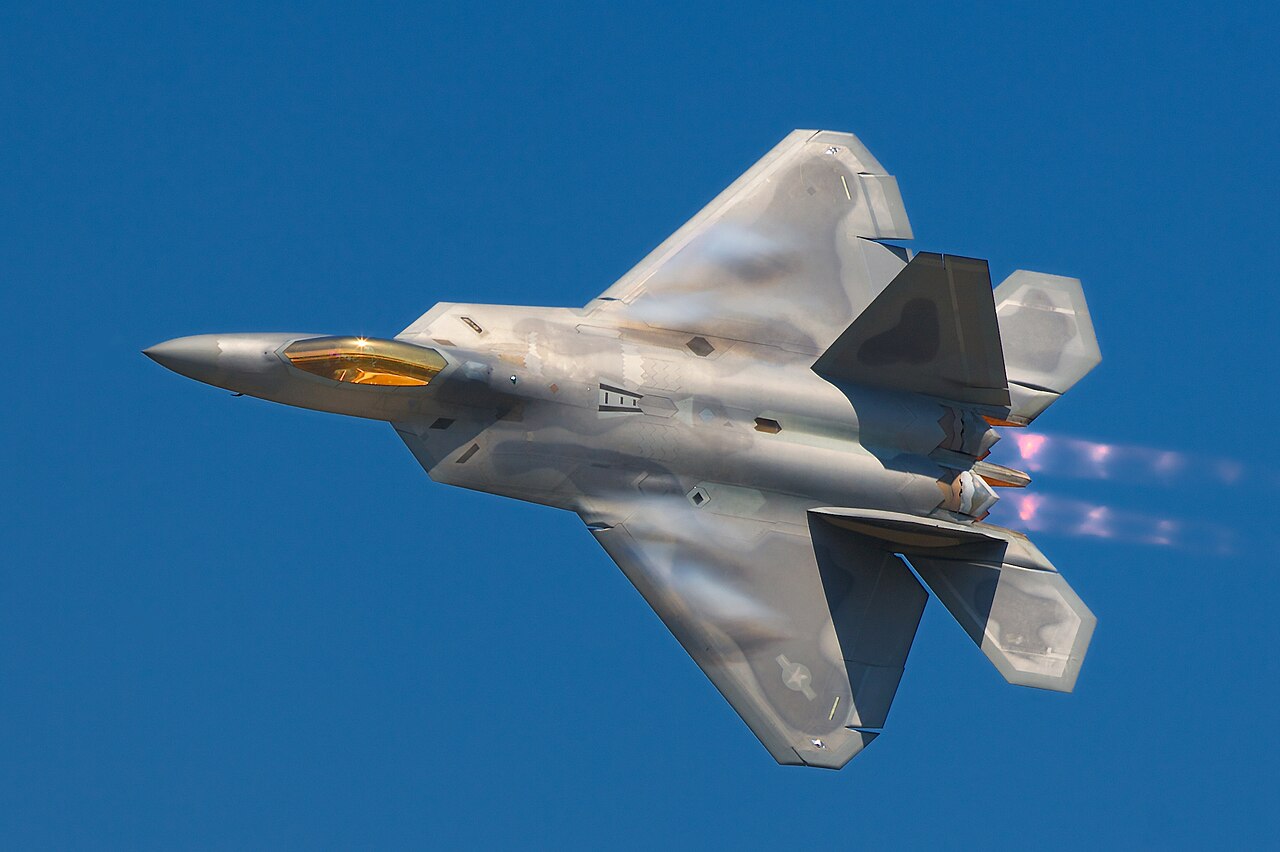
Early infrared missiles like the AIM-9B Sidewinder were strictly tail-chase weapons. They could only see the hot tailpipe of an enemy fighter and had to be launched from behind. Modern weapons carried by fighters like the F-22 Raptor and F-35 Lightning II, such as the AIM-9X, IRIS-T, and PL-10, are all-aspect seekers. They can see the entire airframe’s infrared signature, including skin friction heating on a supersonic target, and can be launched from almost any angle.
Modern infrared seekers also use sophisticated processing to reject countermeasures. If an aircraft dispenses flares, the seeker’s algorithm looks at the shape, trajectory, and temperature profile of each detected source. A flare burns hotter but for a shorter time and falls on a different ballistic path than an aircraft. The seeker picks the real target and ignores the decoy.
Semi-Active Radar: The Old Workhorse
Semi-active radar homing, or SARH, requires the launching aircraft to illuminate the target with its own radar, a compromise modern stealth designs work hard to avoid throughout the missile’s flight. The missile’s seeker listens for radar energy reflected off the target and homes on the reflection.
SARH dominated air-to-air engagements from the late 1950s through the early 1990s. Weapons like the AIM-7 Sparrow and the Soviet R-27 were mainstays of their eras. The approach works well and is relatively simple, but it has a fatal weakness: the launching fighter must keep its radar locked on the target until the missile hits. That leaves the fighter vulnerable, committed to a predictable flight path, and easy to counter.
Active Radar: The Fire-and-Forget Revolution
Active radar seekers changed everything. A missile with its own onboard radar can be launched, follow a midcourse guidance update from the launching fighter, then switch on its own radar in the final seconds and guide itself home. The fighter that launched it can turn, dive, or break lock and go on to other targets.
The AIM-120 AMRAAM was the first widely fielded active-radar air-to-air missile, and its descendants now equip most Western fighters. The Russian R-77 and the Chinese PL-15 are similar in concept. Each uses a compact active radar in the nose that operates in X or Ku band and gives the missile enough independence to engage without continuous support from the shooter.
Active radar seekers are more complex and more expensive than infrared or semi-active units, but their tactical advantage is enormous. A flight of fighters can launch a salvo of active-radar missiles at multiple targets and maneuver away while the missiles handle the terminal endgame.
Anti-Radiation Seekers
Anti-radiation missiles like the AGM-88 HARM and the newer AGM-88G AARGM-ER do not home on aircraft. They home on radars themselves. The seeker is a passive radio receiver tuned to the frequencies used by enemy air defense radars. When an enemy radar emits, the missile sees it and flies down the beam.
This is the backbone of suppression of enemy air defenses, or SEAD. The mere threat of an anti-radiation missile forces enemy radar operators to shut down, which in turn opens the airspace for strike aircraft. Modern anti-radiation seekers also integrate inertial navigation and GPS so that if the target radar shuts off, the missile can still hit the last known location.
Dual-Mode and Imaging Infrared
Some of the latest seekers combine two sensing modes. The AIM-9X Block II and the Meteor, for example, pair infrared imaging with radio-frequency datalinks. Dual-mode air-to-ground weapons like the GBU-54 combine laser and GPS guidance. Combining sensors makes a seeker harder to jam and harder to spoof.
Imaging infrared is itself a major leap. Instead of a single detector that produces a yes-or-no signal, an imaging infrared seeker produces an actual thermal picture of the battlespace in front of the missile. Pattern-recognition algorithms pick out the right target shape and the right aim point. This is how modern ground-attack missiles can strike a specific window on a specific building.
Why Seekers Decide Air Battles
The seeker is often the single most important component of a modern missile. A bigger rocket motor, a cleaner airframe, or a stronger warhead do not matter if the seeker cannot find, distinguish, and hold its target in a cluttered real-world environment. That is why seeker development absorbs so much of the world’s missile research budgets, and why even small improvements, such as a new focal-plane array or a smarter countermeasure-rejection algorithm, can tilt the balance of an air campaign.
The trajectory is clear. Seekers will get more sensors, more processing, more autonomy, and more ability to work together through datalinks. The missile that wins the next air war will not be the fastest. It will be the one whose seeker refuses to be fooled.