Checked September 8, 2026. A sonic boom is generated along a supersonic flight path, not only at the instant an aircraft crosses Mach 1. A listener hears it when the pressure disturbance passes their location. NASA’s August 2026 sonic-boom explainer.
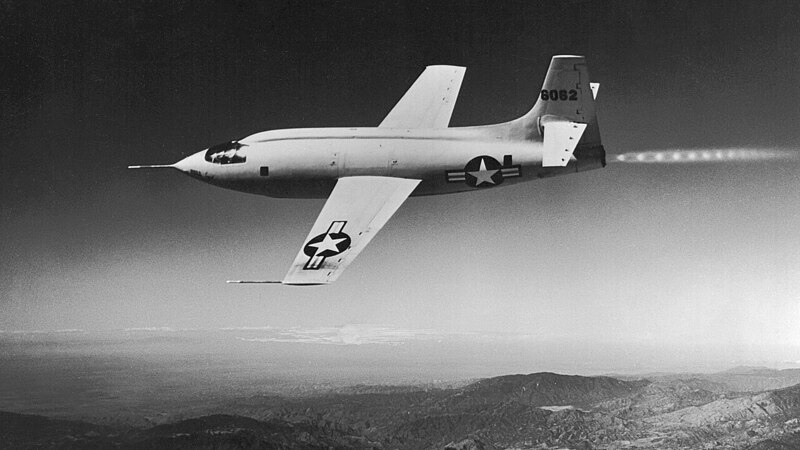
If you’ve ever heard the crack of a whip or the bang of a gunshot, you’ve experienced a miniature version of the same phenomenon that makes supersonic aircraft shake buildings. The sonic boom is one of the most dramatic effects in physics — and understanding how it works is key to understanding why supersonic flight is so challenging.
Sound as a Wave
Sound travels through air as a pressure wave, moving at approximately 340.3 meters per second (761 mph / 1,225 km/h) in dry air at the standard sea-level temperature of 15°C. This speed is known as Mach 1, named after Austrian physicist Ernst Mach.
When an aircraft flies at subsonic speeds (below Mach 1), the pressure waves it creates propagate outward in all directions, including ahead of the aircraft. This allows the air to “get out of the way” gradually, creating smooth, relatively quiet airflow.
Breaking the Barrier
As an aircraft approaches Mach 1, it begins to catch up with its own pressure waves. The waves pile up in front of the aircraft, forming a region of highly compressed air called a shockwave. This is the famous “sound barrier” — not an actual physical wall, but a dramatic increase in aerodynamic drag and turbulence.
Once the aircraft exceeds Mach 1, it outruns its own sound. The shockwaves can no longer propagate ahead and instead form a cone-shaped wave trailing behind the aircraft, known as a Mach cone. For an ideal Mach cone made by small disturbances in uniform supersonic flow, its half-angle is:
sin(θ) = 1 / M
Where θ is the half-angle and M is the Mach number. At Mach 2, the ideal Mach angle is 30°. At Mach 3, it is about 19.5°. A finite-strength shock can sit at a different angle, so this formula does not describe every shock around a real aircraft.
The Double Boom
Most people think a sonic boom is a single bang, but it’s actually two distinct shockwaves. The first is created at the nose of the aircraft (where air is compressed), and the second at the tail (where pressure returns to normal). These two shockwaves are often described as an “N-wave” because of the shape they produce on a pressure graph:
- A sudden pressure increase (nose shock)
- A gradual decrease back through ambient pressure
- A sudden return to normal (tail shock)
When you hear a sonic boom, the characteristic “ba-BOOM” sound is actually these two shockwaves arriving in rapid succession, typically separated by a fraction of a second depending on the size of the aircraft.
Factors That Affect Sonic Boom Intensity
- Aircraft size and shape: Larger aircraft produce louder booms. Sleek, elongated designs (like the NASA X-59) spread the shockwave energy over a longer distance, reducing peak pressure.
- Altitude: Higher altitude means the shockwave has more distance to dissipate before reaching the ground. The Concorde flew at 60,000 feet partly for this reason.
- Speed: Faster speeds generally produce stronger booms, though the relationship is not linear.
- Atmospheric conditions: Temperature gradients, wind, and humidity can refract, focus, or dissipate shockwaves. Temperature inversions can actually amplify booms at ground level.
- Maneuvers: Turns and acceleration can focus shockwave energy, creating “super booms” in certain areas — sometimes several times louder than the boom from straight-and-level flight.
The Concorde’s Boom
The Concorde produced a sonic boom measuring approximately 105 PLdB (perceived level in decibels) at ground level. PLdB is a perceived-level metric; it should not be compared directly with an unspecified dB sound-pressure reading. This was loud enough to rattle windows, startle livestock, and generate thousands of noise complaints — which is why overland supersonic flight was banned in the United States in 1973.
NASA’s Quesst mission aims to provide community-response evidence that regulators can use when considering acceptable supersonic noise. Achieving a design noise target does not by itself establish a new operating rule.
Can We Eliminate Sonic Booms?
Supersonic aircraft produce shock waves, but the noise heard at a particular location depends on the aircraft, flight path and atmosphere. A low-boom shape aims to keep pressure changes weaker as they travel toward the ground. Atmospheric refraction can also prevent some disturbances from reaching the surface; that is different from demonstrating a low-boom design under its intended test conditions.
The future of supersonic travel depends on this science. If engineers can tame the boom, the skies could once again echo with the sound — or rather, the gentle thump — of aircraft flying faster than sound.
X-59: What the 2026 Flights Have Shown
X-59 has reached Mach 1.4, but NASA’s September 4 update separates performance testing from the upcoming acoustic-validation campaign. Its roughly 75 PLdB ground-noise objective is a design target, not a measured result established by the 25th-flight report.
References
- Whitham, G.B. (1952). The Flow Pattern of a Supersonic Projectile. Communications on Pure and Applied Mathematics, 5(3), 301-348. DOI: 10.1002/cpa.3160050305
- Bonavolonta, G. et al. (2023). Review of Sonic Boom Prediction and Reduction Methods for Next Generation of Supersonic Aircraft. Aerospace, 10(11), 917. DOI: 10.3390/aerospace10110917
- Maglieri, D.J. et al. (2014). Sonic Boom: Six Decades of Research. NASA/SP-2014-622. NASA Technical Reports