Checked September 8, 2026. Standard-day Mach 1 is about 1,225 km/h at 15°C. At other temperatures it changes. Speed-regime boundaries are engineering conventions, and local airflow can differ from the aircraft’s free-stream Mach number.
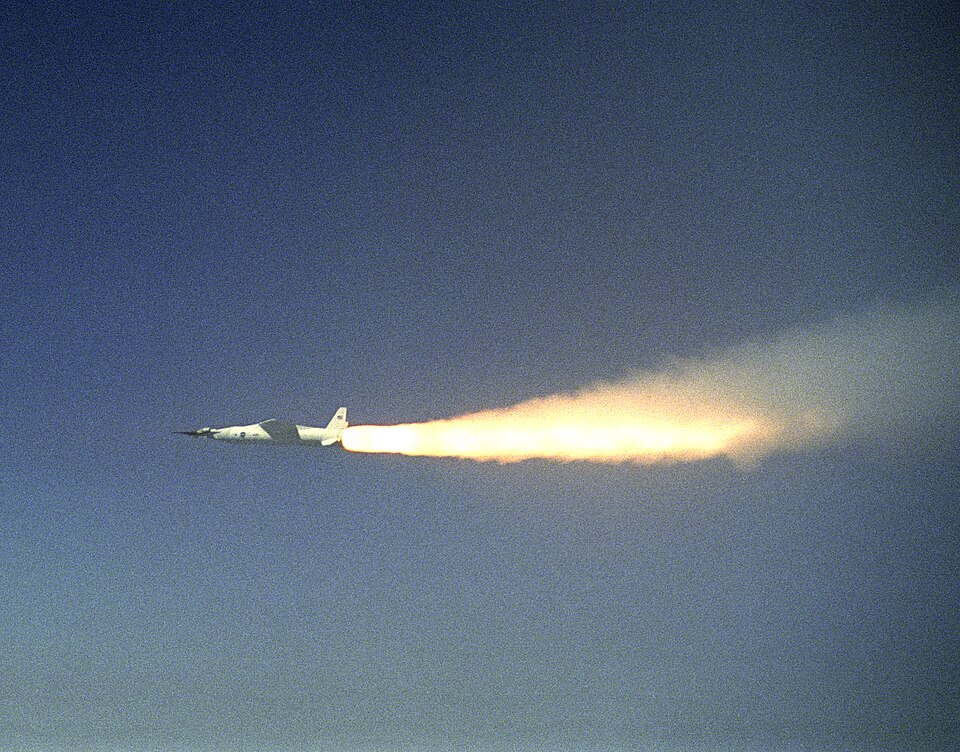
In the world of aviation, speed isn’t just measured in miles per hour or kilometers per hour — it’s measured in Mach numbers. But what exactly is a Mach number, why does it matter, and what happens at different Mach regimes? Let’s break it down.
What Is a Mach Number?
The Mach number is the ratio of an object’s speed to the speed of sound in the surrounding medium. It’s named after Ernst Mach (1838–1916), an Austrian physicist who studied shockwaves and supersonic phenomena.
Mach = V / a
Where V is the velocity of the object and a is the local speed of sound. At sea level on a standard day (15°C / 59°F), the speed of sound is approximately 340.3 m/s (about 761 mph / 1,225 km/h). The often-quoted 343 m/s applies at roughly 20°C, not the 15°C standard-atmosphere condition.
The Speed of Sound Is Not Constant
Here’s what trips up most people: the speed of sound changes with temperature. At higher altitudes where the air is colder, the speed of sound decreases. Near 11 km (about 36,000 feet) in the standard atmosphere, where the temperature is approximately −56.5°C, the speed of sound drops to about 295 m/s (660 mph).
This means an aircraft flying at 660 mph near 11 km is about Mach 1 — even though the same speed at 15°C near sea level would be about Mach 0.87. This is why pilots and engineers use Mach numbers instead of simple speed measurements: the Mach number captures the aerodynamic reality that matters for flight dynamics.
The Five Speed Regimes
Subsonic (Mach 0 – 0.8)
Most commercial airliners operate in this regime. Local flow can accelerate above the aircraft’s free-stream speed; whether shocks appear depends on the shape and flight condition. Modern jets like the Boeing 787 cruise at about Mach 0.85, technically entering the next category.
Transonic (Mach 0.8 – 1.2)
The trickiest regime. Some airflow over the aircraft exceeds Mach 1 (especially over curved surfaces like the wing’s upper surface), while other regions remain subsonic. This creates shockwaves on the aircraft surface, leading to increased drag, buffeting, and control difficulties. The “sound barrier” exists in this zone.
Supersonic (Mach 1.2 – 5.0)
The free-stream flow is supersonic, but local subsonic regions can still occur behind shocks and within parts of the flow field. Shockwaves form at the nose and other sharp features. Aircraft in this regime include:
- Concorde — Mach 2.04
- F-22 Raptor — Mach 2.25
- SR-71 Blackbird — Mach 3.32
- MiG-25 Foxbat — Mach 2.83
Hypersonic (approximately Mach 5 and above)
Aerodynamic heating and strong shock interactions become major design concerns. Gas chemistry and ionization can matter at sufficiently high temperatures, especially during fast reentry; a plasma layer does not automatically appear whenever Mach 5 is crossed. Examples include:
- X-15 — Mach 6.7 (the fastest crewed aircraft ever)
- Space Shuttle (during reentry) — approximately Mach 25
- Modern hypersonic weapons (Russia’s Avangard, China’s DF-ZF)
High-hypersonic and reentry flight (often Mach 10+)
Speeds associated with spacecraft reentry and intercontinental ballistic missiles. Thermal protection becomes the primary engineering challenge, as surface temperatures can exceed 1,600°C (2,900°F).
Why Mach Number Matters in Aircraft Design
The Mach number fundamentally changes how air behaves around an aircraft:
- Below Mach 0.3: Air can be treated as incompressible — density doesn’t change much. Simple aerodynamics apply.
- Mach 0.3 – 0.8: Compressibility effects begin. Aircraft designers must account for air density changes.
- Mach 0.8 – 1.2: The transonic regime requires special wing designs (swept wings, supercritical airfoils) to delay and manage shockwave formation.
- Above Mach 1.2: Shock waves and compressibility strongly shape the design. Swept or delta wings and suitable inlet designs are common solutions, not universal requirements.
- Above Mach 5: Conventional turbine propulsion faces severe inlet-temperature challenges. Designers investigate scramjets, rockets and combined-cycle systems; the operating limits depend on the engine and mission.
Supersonic Cruise vs. Dash
There’s an important distinction between aircraft that can briefly exceed Mach 1 (“supersonic dash”) and those designed to cruise at supersonic speeds for extended periods. Many modern fighters can dash past Mach 1 using afterburners, but only a few can sustain supersonic flight without them — a capability called supercruise.
The F-22 Raptor can supercruise at approximately Mach 1.5 without afterburner. The Concorde cruised at Mach 2.04 for hours at a time. This sustained supersonic capability requires entirely different engine and airframe designs compared to a brief supersonic dash.
Understanding Mach numbers is fundamental to understanding why supersonic aircraft look the way they do, why they fly at the altitudes they fly, and why breaking the sound barrier was — and remains — one of aviation’s greatest engineering challenges.
Why a Mach Ranking Is Not a Stopwatch Record
A published top speed, a flight-test result and a proposed design speed answer different questions. Check which one a figure represents before comparing aircraft. SR-72 and Halcyon concept targets cannot be treated as completed flight records.
For a worked example, NASA reports the X-15 record as Mach 6.7 and 4,520 mph (about 7,274 km/h). Multiplying 6.7 by a sea-level sound speed would give the wrong result for that high-altitude flight. NASA X-15 history. Try the Mach converter with a stated atmospheric condition, and read the notes on the speed comparison.
For an ideal-gas estimate, use a = √(γRT), with temperature in kelvin. With dry-air values γ ≈ 1.4 and R ≈ 287.05 J/(kg·K), the result at 288.15 K is about 340.3 m/s. NASA explanation of the speed of sound.
References
- Anderson, J.D. (2019). Hypersonic and High-Temperature Gas Dynamics, 3rd Edition. AIAA Education Series. DOI: 10.2514/4.105142
- Heiser, W.H. & Pratt, D.T. (1994). Hypersonic Airbreathing Propulsion. AIAA Education Series. DOI: 10.2514/4.470356
- Whitham, G.B. (1952). The Flow Pattern of a Supersonic Projectile. Communications on Pure and Applied Mathematics, 5(3), 301-348. DOI: 10.1002/cpa.3160050305