Carrier aviation has large costs beyond the aircraft themselves. A nuclear-powered supercarrier costs roughly thirteen billion dollars to build, carries an air wing worth another five to seven billion, and requires a full strike group of cruisers, destroyers, and submarines to keep it alive in a contested environment. Add the cost of pilots, maintainers, fuel, and munitions, and a single American carrier strike group consumes resources that rival the entire defense budget of a mid-sized country.
So why do nations keep building them? Because for all their cost, carriers do something no land-based airpower or even a sixth-generation fighter fleet can: they move. Understanding the economics of carrier operations is understanding why the United States Navy still orders them, why China is racing to match the American fleet, and why the United Kingdom, France, India, and Japan continue to pour billions into flat-top aviation.
The Price of a Floating Airbase
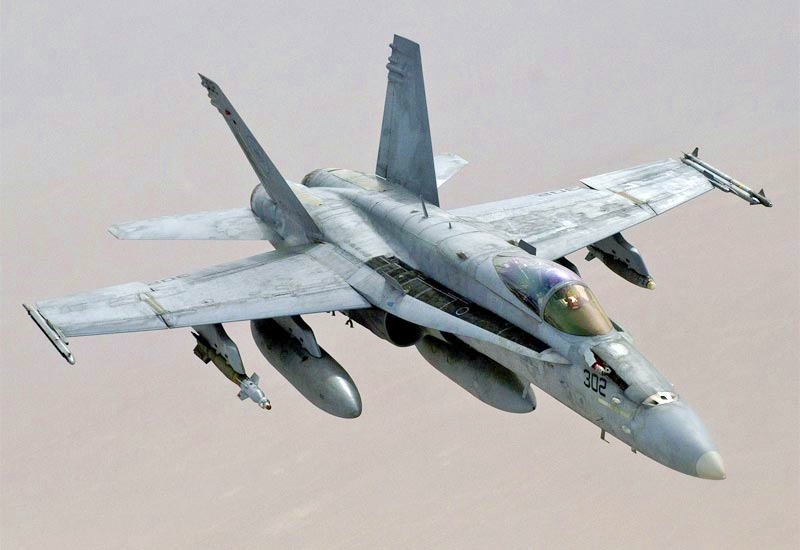
A Ford-class carrier is a small city. It displaces over one hundred thousand tons, houses five thousand sailors, generates enough electricity to power a town, and operates an air wing of roughly sixty to seventy aircraft. Each of those carrier-based fighters costs between eighty million and over a hundred million dollars. The catapults, arresting gear, elevators, and deck crew systems are specialized systems that add to the cost.
Operating cost is where the real bill arrives. A nuclear carrier does not burn fuel for propulsion, but her air wing does, and jet fuel delivered at sea costs far more than at a home airfield. Spare parts, consumables, munitions, and the cost of keeping a five-thousand-person crew paid, fed, and housed mean that a single deployed Nimitz-class or Ford-class carrier costs the Navy roughly six million dollars a day to operate.
Multiply that across a typical six-to-nine-month deployment and one carrier burns through more than a billion dollars of operating cost before she even returns home. Mid-life refuelings of the nuclear reactor, typically around the twenty-five year mark, add several billion more in one-time modernization costs.
What That Money Actually Buys
A carrier strike group puts roughly forty strike-fighters, a handful of electronic attack aircraft, airborne early warning, and organic helicopter support within range of almost any coastline on earth, on a schedule the carrier itself controls. Land bases depend on host-nation permission that can vanish overnight. A carrier needs no permission. She is sovereign American territory that happens to float.
That mobility is why the United States has built and operated supercarriers continuously since the 1950s and plans to do so into the 2070s. Every contingency planner who has tried to replace carrier aviation with long-range bombers, forward-based fighters, or standoff missiles has concluded that nothing else combines presence, persistence, and flexibility the way a carrier does.
China’s Bet on Flat-Tops
The clearest sign that carriers still matter is that China is building them as fast as her shipyards allow. The Liaoning and Shandong are ski-jump carriers derived from a Soviet-era hull. Fujian, launched in 2022 and conducting sea trials through 2024 and 2025, introduces electromagnetic catapults and a true fixed-wing air wing.
The fourth Chinese carrier, widely believed to be nuclear powered, is under construction and is expected to displace roughly the same hundred thousand tons as a Ford. By 2035 the People’s Liberation Army Navy could operate five or six carriers. That is not a hedge. It is a strategic bet that power projection at sea will remain decisive for the rest of the century.
Smaller Navies, Smarter Decks
Not every carrier is a supercarrier. The British Queen Elizabeth class, the Japanese Izumo conversions, the Italian Cavour, the Spanish Juan Carlos, and the French Charles de Gaulle all operate fixed-wing aircraft, yet each reflects a different balance of cost and capability.
Many now operate the short takeoff and vertical landing F-35B Lightning II, which lets a forty-thousand-ton ship deliver fifth-generation combat power that would once have required a ninety-thousand-ton American carrier. The F-35B has fundamentally changed the economics of smaller decks and is the single biggest reason navies that had given up fixed-wing carrier aviation, such as Japan, are returning to it.
The Vulnerability Debate
Critics argue that modern anti-ship ballistic missiles, long-range hypersonic weapons, and swarming drones make carriers obsolete. The United States Navy’s answer is a layered defense: Aegis cruisers and destroyers with SM-3, SM-6 and SM-2 interceptors, carrier-based electronic warfare, decoys, and in the near future directed-energy weapons and new hypersonic-capable interceptors.
Carrier survivability is a race between offense and defense, and the race is never finished. What the debate misses is that every land base, every forward airfield, and every logistics hub within a threat ring faces the same missile problem. A carrier can at least move.
Why the Math Still Works
Carriers are the most expensive ships ever built, but they are also the most useful. They deter by their presence. They reassure allies. They compress crisis response from weeks to hours. They project airpower without asking permission. And they do all of this with an air wing that can be swapped out as technology evolves, so a ship commissioned today will be flying jets not yet designed by the time she retires.
The cost of a carrier group must be weighed against its ability to operate aircraft without a nearby land base. That tradeoff depends on access to bases, the threat environment and the missions a navy expects to perform.