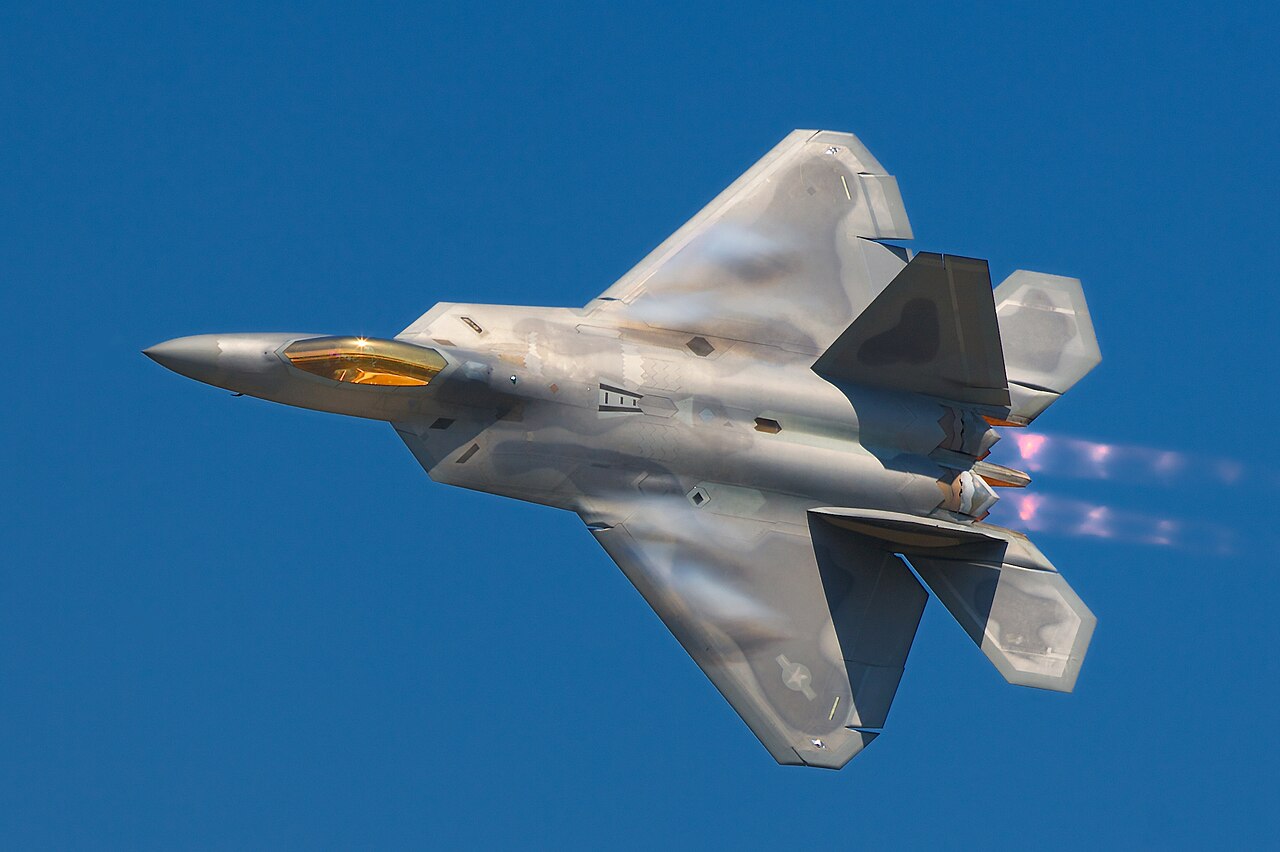
Air superiority is one of the oldest doctrines in modern warfare, yet in the age of drones, hypersonics, and long-range missiles, some analysts argue it has quietly become obsolete. They are wrong. The ability to deny an adversary the use of the sky remains one of the most decisive military advantages any nation can field, and the wars of the 2020s have made that lesson painfully clear.
From the skies over Ukraine to the contested approaches to Taiwan, the battle for the air domain continues to shape the outcome of ground campaigns, naval operations, and political negotiations. A nation that cannot protect its own airspace cannot protect anything that sits beneath it.
The Forgotten Lesson of Every Modern War
Every major conflict since 1940 has reinforced a simple truth: whoever owns the sky, owns the fight. The Luftwaffe’s defeat over Britain was the first crack in the Nazi war machine. American fighter pilots over Korea and Vietnam learned that air superiority did not just protect bombers but shaped the entire battlefield below.
Desert Storm in 1991 was the apex of this doctrine. Coalition fifth and fourth generation fighters dismantled Iraq’s integrated air defense network in days, and what followed on the ground was less a war than a demolition. The Iraqi army had tanks, artillery, and troops, but without a roof over their heads, none of it mattered.
Fast forward to 2022. Russia invaded Ukraine expecting to repeat that dominance. Instead, the Russian Aerospace Forces failed to suppress Ukrainian air defenses, lost helicopters and fighters at an alarming pace, and were forced into standoff strikes with cruise missiles and loitering munitions. The result is a grinding ground war that has lasted years, not weeks.
Why Drones Did Not Replace Fighters
There is a popular theory among defense commentators that cheap drones, especially the Shahed-136 loitering munition, have rendered manned fighters obsolete. The evidence says otherwise.
Drones are extraordinary at reconnaissance, strike, and attrition of fixed targets. They cannot contest airspace. They cannot hunt other aircraft at supersonic speeds, intercept cruise missiles at low altitude, or push back enemy fighters trying to establish their own air superiority. A Bayraktar TB2 cannot dogfight a Su-35, and no amount of FPV drones can substitute for an AWACS-directed fighter sweep.
What drones have done is make air superiority harder to achieve and more expensive to maintain. They saturate defenses, force fighters to burn fuel chasing low-value targets, and complicate the air picture. But they are a problem to be solved by fighters, not a replacement for them.
The Real Threat: Integrated Air Defense
The hard part of air superiority in the 2020s is not the enemy fighter, it is the enemy surface-to-air missile network. Modern double-digit SAMs like the S-400, HQ-9B, and emerging Chinese systems can threaten aircraft from hundreds of kilometers away. They fuse with long-range radars, passive emitter detectors, and networked command systems to create kill zones no non-stealthy aircraft can survive.
This is why stealth matters so much. It is not about being invisible, it is about shrinking the detection bubble of an enemy SAM from three hundred kilometers to twenty, giving a fighter room to operate. It is also why the United States is investing so heavily in the sixth-generation F-47 and the B-21 Raider bomber. Both are built to operate inside the teeth of modern air defenses.
Nations that cannot penetrate these bubbles cannot deliver ordnance on defended targets. They cannot escort troops. They cannot enforce no-fly zones. They cannot even protect their own infrastructure from precision strike.
Air Superiority in the Pacific
The coming competition in the Western Pacific is the most demanding air superiority problem the United States has ever faced. China’s People’s Liberation Army Air Force has modernized faster than any military service in history, fielding the J-20, developing the J-36 sixth-generation platform, and building out a dense network of H-6 bombers armed with anti-ship and land-attack cruise missiles.
Distances are vast. A fighter launching from Kadena in Okinawa must cover hundreds of miles just to reach the first ring of the Chinese air defense network. Tankers become priority targets. Airbases can be destroyed by ballistic missiles before a single sortie launches. Carrier strike groups operate under constant threat from DF-21D and DF-26 anti-ship ballistic missiles.
None of that changes the fundamental requirement. If American and allied forces cannot hold air superiority over key chokepoints, they cannot support Taiwan, cannot reinforce the first island chain, and cannot prevent a fait accompli on the ground.
The Economic and Industrial Challenge
Building and sustaining an air superiority fleet is ruinously expensive. A single F-35A now costs around eighty million dollars, and sixth-generation aircraft will likely exceed two hundred million per tail. Training a fighter pilot takes years and millions of dollars per seat. Replacing lost airframes in a high-intensity war would be almost impossible within a meaningful timeframe.
That is why concepts like Collaborative Combat Aircraft and loyal wingman programs matter. They promise to multiply the effect of every manned fighter with cheaper, attritable unmanned partners. These are not a replacement for air superiority doctrine, they are the new tools of it.
Nations that fail to invest in this mix will find themselves unable to contest the air in any meaningful sense. A country without modern fighters is a country whose sovereignty lives on the goodwill of its neighbors.
Key Takeaways
- Air superiority remains the decisive enabler in modern warfare, as shown in Ukraine and Desert Storm.
- Drones supplement but do not replace manned fighters in the contest for control of the sky.
- Modern integrated air defense networks are the primary challenge, driving investment in stealth.
- The Pacific theater presents the most demanding air superiority problem in American history.
- Unmanned wingmen will multiply fighter effectiveness, not replace the mission itself.
This report is part of the Drones & UAVs Encyclopedia — the hub connecting our coverage of loitering munitions, deep-strike drones, and the loyal wingmen now flying alongside crewed fighters.