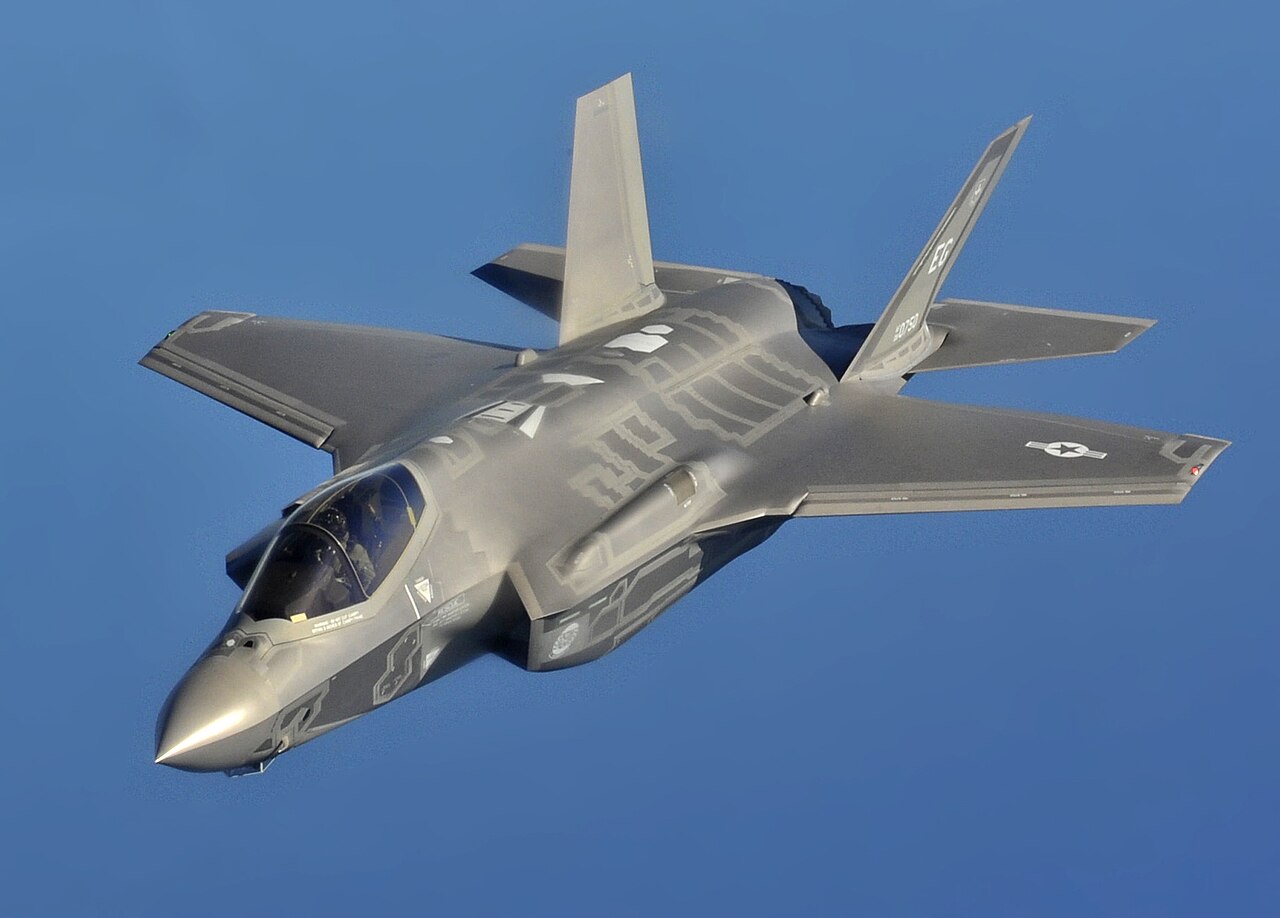
South Korea’s KF-21 Boramae is quietly becoming one of the most interesting fighter programs in the world. Born from a vision of strategic autonomy, aimed at replacing the Republic of Korea Air Force’s aging F-4s and F-5s, and developed in partnership with Indonesia, the KF-21 has moved from skeptical press coverage to confident production in a remarkably short timeframe.
The program is often compared to Turkey’s Kaan and Europe’s Typhoon, but KF-21 occupies its own niche. It is officially described as a 4.5-generation fighter with clear growth paths toward fifth-generation features like internal weapons bays. For a country that had never designed a clean-sheet supersonic fighter before, the progress has been striking.
Where the Program Stands Today
The KF-21 has flown multiple prototypes, and the type has been through an extensive flight test program covering supersonic flight, weapon separation, air-to-air refueling, and extensive avionics testing. The South Korean government has committed to initial production, with deliveries to the ROKAF planned across the second half of the 2020s.
Korea Aerospace Industries is the prime contractor, with significant involvement from Hanwha, LIG Nex1, and a broad Korean industrial base. The engine is the General Electric F414, license-built in Korea, giving the aircraft commonality with the Swedish Gripen E and the American Super Hornet. The radar is a domestically developed AESA, the EL/M-2052 derivative, which has been flight-tested on the prototypes and is performing well in trials.
Weapons integration has progressed rapidly. AIM-120 AMRAAM, AIM-9X, and the domestic Meteor-equivalent long-range missile are all part of the weapons roadmap. Air-to-ground capability, including the Korean KEPD-equivalent standoff cruise missile, is on the integration timeline for later blocks.
The Indonesian Partnership Saga
Indonesia signed on as a twenty percent partner in the KF-21 program back in 2010, committing to fund part of development and eventually build F-IX variants of the aircraft. The partnership has been turbulent, with repeated disputes over payment schedules and technology transfer. At various points, Indonesia has been billions of dollars behind on its financial obligations.
The situation has improved somewhat in recent years, with renegotiated payment terms and renewed political commitment from Jakarta. However, industry observers remain skeptical that Indonesia will be able to field a meaningful fleet of F-IX aircraft given its other budget priorities, including the Rafale buy and earlier commitments to Russian Su-35s that ultimately fell through.
Regardless of Indonesia’s ultimate role, the Korean side of the program is now advanced enough to continue without meaningful dependence on Jakarta. Korean officials have publicly stated that the program will proceed on schedule regardless of partner contributions.
Is KF-21 a Fifth-Generation Fighter?
The marketing around KF-21 is careful. KAI describes the aircraft as 4.5-generation, with fifth-generation growth potential. The airframe has stealth-influenced shaping but carries weapons externally in the current configuration, which significantly compromises radar cross-section. Internal weapons bays are part of the long-term roadmap but are not in the initial production blocks.
This is a pragmatic choice. Building a full fifth-generation fighter from scratch, with internal bays, advanced materials, and all the supporting subsystems, was judged too risky for a first-time effort. Starting with a 4.5-generation airframe and improving it over successive blocks gives Korea a realistic path to indigenous fighter capability without betting the entire program on untested technology.
The result is an aircraft that competes more directly with the Eurofighter Typhoon or Boeing F-15EX than with the F-35. That is still an extremely capable class of fighter, and for Korea’s regional threats it may be entirely sufficient.
Export Prospects
Korea has been building a strong defense export track record, selling K2 tanks and K9 howitzers across Europe, light attack aircraft to Southeast Asia, and now looking to push the KF-21 into export markets. The Philippines, Malaysia, Poland, and several Middle Eastern countries have been mentioned as potential customers.
The KF-21 competes in an interesting slice of the market. Countries that want a modern 4.5-generation fighter but cannot afford or cannot get the F-35 have historically chosen between the Typhoon, Rafale, Gripen, and the Super Hornet. The KF-21 adds Korean industrial support, competitive pricing, and the potential for significant offsets and local production to the mix.
Korea is also pitching the KF-21 as a platform that will not come with the political strings sometimes attached to American or European fighters. This pitch resonates in Southeast Asia and parts of the Middle East where buyers want sovereign control over their weapons systems.
Strategic Context in the Korean Peninsula
The KF-21 is not just an industrial program. It is a response to the specific strategic problem of confronting North Korean and potentially Chinese threats to South Korean sovereignty. The ROKAF needs to replace the F-4 and F-5 with something capable of meeting the growing North Korean air threat and surviving in a theater where Chinese and Russian systems also matter.
The KF-21 complements rather than replaces South Korea’s F-35 fleet. The F-35 provides high-end stealth capability for penetration missions against heavy air defenses. The KF-21 provides large numbers of capable 4.5-generation aircraft for air superiority, strike, and homeland defense missions where absolute stealth is less critical.
This high-low mix is a sensible doctrine for a mid-sized air force. It keeps a meaningful number of aircraft available for routine operations while preserving the stealth fleet for the missions where it matters most.
Key Takeaways
- KF-21 Boramae is in active flight testing and early production, with ROKAF deliveries planned across the late 2020s.
- The aircraft is a 4.5-generation fighter with a clear growth path toward fifth-generation features.
- The Indonesian partnership has been troubled but no longer threatens the Korean side of the program.
- Export prospects include Southeast Asia, the Middle East, and potentially parts of Europe.
- KF-21 complements South Korea’s F-35 fleet in a practical high-low mix for the peninsula.