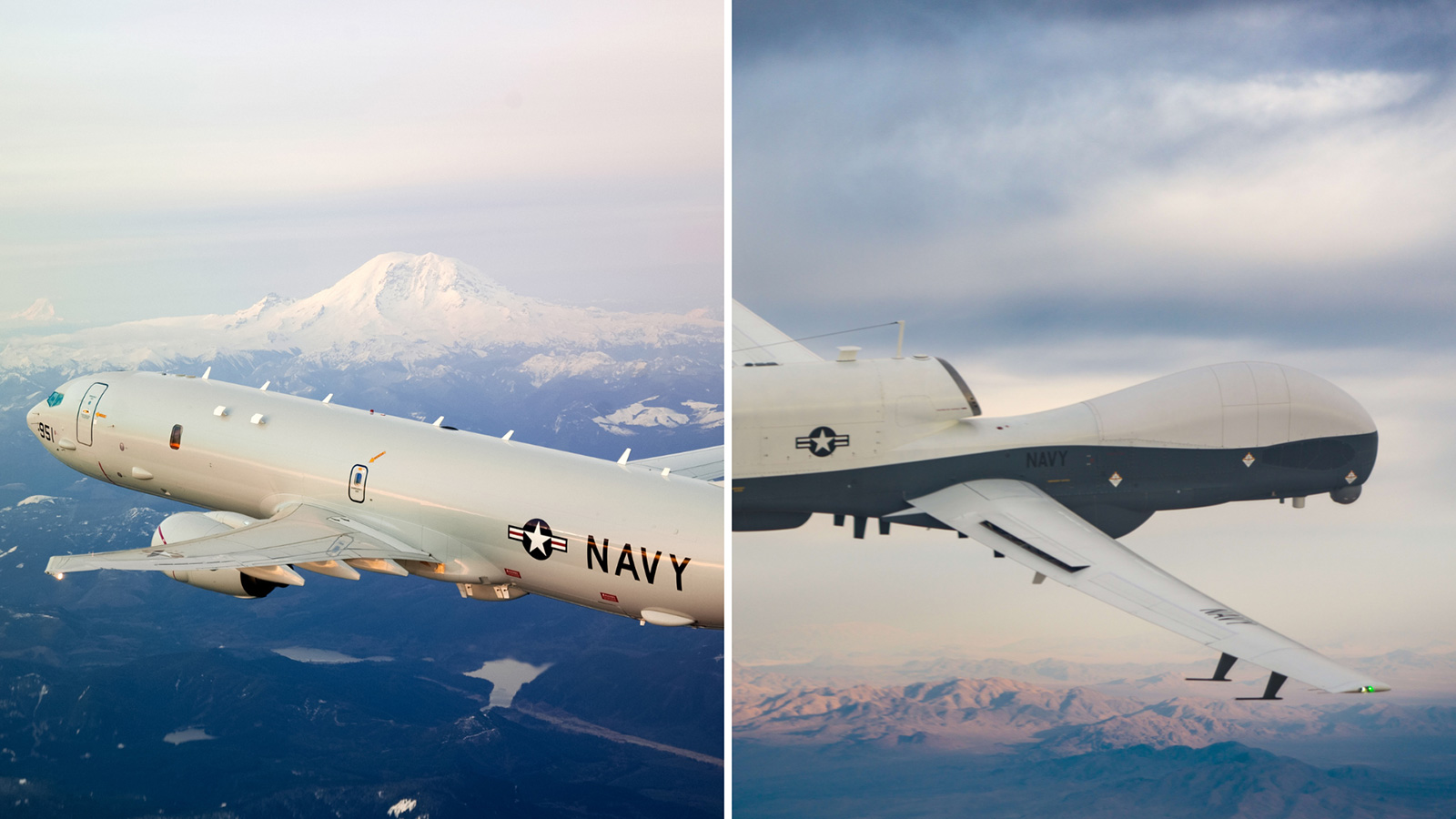
Boeing and Northrop Grumman have demonstrated a common digital interface that lets a P-8A Poseidon operator assign a mission to an MQ-4C Triton system and receive processed intelligence in return. The test points toward closer cooperation between the Navy’s crewed maritime patrol aircraft and its high-altitude, long-endurance uncrewed surveillance platform.
What the Demonstration Actually Did
In the laboratory test, a P-8A operator sent machine-readable mission instructions to a simulated Triton using Universal Command and Control Interface messages. The Triton system planned a route to the requested area, employed its simulated sensors, processed the result onboard and reported back. The data path included a satellite relay to represent operational communications.
No P-8A or MQ-4C flew during this demonstration, and it was not an operational handover of a live drone. The milestone was software interoperability: the mission-management and autonomy layers communicated through Open Mission Systems and UCI standards instead of a custom point-to-point connection.
Why Open Interfaces Matter
The P-8A and Triton already perform complementary maritime patrol roles. Direct, standardized tasking could shorten the path from a crew identifying a new area of interest to an uncrewed aircraft collecting and returning intelligence. It could also make other U.S. and allied platforms easier to connect if they implement the same interfaces.
The next meaningful step will be qualified integration and flight testing with operational aircraft. Until then, this remains a technology demonstration rather than a fleet capability. For the wider trend, see our Collaborative Combat Aircraft explainer.