Facts summary and sources
North American XB-70 Valkyrie: Demonstrated maximum Mach number: Mach 3.08 (Demonstrated flight result). AV-2, 12 April 1966. The separately recorded 2,020 mph maximum occurred on 12 January 1966. First flight: 1964. 21 September 1964, AV-1; AV-2 first flew in July 1965.
This is a secondary compilation. A source-check date applies only to the listed claim, not to the whole page or its translation. A page update is not a source check.
Sources and check records
- NASA: XB-70 flight summary — The fastest Mach flight reached Mach 3.08 on 12 April 1966; the fastest flight by miles per hour reached 2,020 mph on 12 January 1966. [These were separate flights. Convert the latter to about 3,251 km/h; it is not a conversion of Mach 3.08. NASA records 74,000 ft as the highest flight.] · Event date: 1966-04-12 · Source checked for this claim: 2026-10-19
- NASA: XB-70 Valkyrie research programme — AV-1 first flew on 21 September 1964 and made only one flight above Mach 3. AV-2 first flew in July 1965, repeatedly reached Mach 3 and was lost on 8 June 1966. [The two research aircraft had different high-speed limitations; the 1966 Mach 3.08 result must not be attributed to AV-1.] · Source checked for this claim: 2026-10-19
- National Museum of the USAF: XB-70 Valkyrie — Two XB-70As were completed as test aircraft. Museum data list six YJ93 engines, 4,288-mile range, 77,350-ft service ceiling and a length of 185 ft 10 in. [Published specifications are separate from demonstrated NASA flight records. Loaded weight is not maximum takeoff weight. The cancelled bomber concept does not establish a B83 weapons fit for the research aircraft.] · Source checked for this claim: 2026-10-19
- Wikipedia reference · Source-check date not recorded
✈️ Full Specifications
The speed fields describe separate NASA records: Mach 3.08 on 12 April 1966 and 2,020 mph (about 3,251 km/h) on 12 January 1966. Museum specifications give 77,350 ft service ceiling (about 23,576 m) and 4,288 miles range (about 6,901 km; mission profile unspecified); NASA’s highest actual flight was 74,000 ft (22,555 m). Museum dimensions and 30,000 lbf thrust per engine are converted to metric. Its 534,700 lb loaded weight is not labelled maximum takeoff weight. Two research aircraft were completed; none entered operational bomber service.
| Designation | XB-70A |
| Manufacturer | North American Aviation |
| Country | 🇺🇸 United States |
| First flight | 1964 |
| First-flight context | 21 September 1964, AV-1; AV-2 first flew in July 1965. |
| Retired | 1969 |
| Crew | 2 |
| Length | 56.64 m (185.8 ft) |
| Height | 9.37 m (30.7 ft) |
| Max Speed (Mach) | 3.08 |
| Demonstrated maximum Mach number | Mach 3.08 — AV-2, 12 April 1966. The separately recorded 2,020 mph maximum occurred on 12 January 1966. |
| Speed evidence basis | Demonstrated flight result |
| Max Speed | 3,251 km/h |
| Service Ceiling | 23,576 m (77,353 ft) |
| Range | 6,901 km (4,286 mi) |
| Engine | 6 × General Electric YJ93 afterburning turbojets |
| Thrust (each) | AB 133.4 kN |
| Production | 2 |
🌐 Operators
🔁 Variants
- XB-70A AV-1 — surviving research aircraft
- XB-70A AV-2 — lost in June 1966
⚔️ Armament
Overview
The North American XB-70A was built to study large-aircraft flight near Mach 3 after the operational B-70 bomber programme was cancelled. Two aircraft flew, designated AV-1 and AV-2. Neither entered bomber service.
Design and flight tests
Six YJ93 engines powered a long fuselage and delta wing. Fold-down wingtips helped high-speed stability, while the stainless-steel honeycomb structure and titanium components addressed aerodynamic heating.
AV-1 first flew on 21 September 1964. It crossed Mach 3 once, but later flying was restricted. AV-2 had modified wing geometry and better high-speed handling. Mach 3.08 was achieved on 12 April 1966 by AV-2, not AV-1. NASA’s 2,020 mph maximum was recorded on a different flight in January.
End of the programme
AV-2 was destroyed in a collision with an F-104 on 8 June 1966. AV-1 continued research into supersonic aircraft operation and flew to the Air Force Museum on 4 February 1969. It remains in the National Museum of the USAF collection.
The two aircraft carried research equipment. The proposed bomber weapon load was never an operational capability of these two research aircraft.
Video
Frequently Asked Questions
How fast did the XB-70 actually fly?
NASA records Mach 3.08 on 12 April 1966. Its highest speed in miles per hour, 2,020 mph, came on a separate flight on 12 January 1966.
Did AV-1 reach Mach 3.08?
No. The April 1966 result belongs to AV-2. AV-1 exceeded Mach 3 once in October 1965 and subsequently flew under lower speed restrictions.
Was the XB-70 an operational nuclear bomber?
No. The bomber programme was cancelled, and the two completed XB-70As were research aircraft. They had no operational weapons fit.
What happened to the two XB-70s?
AV-2 was lost in a mid-air collision in June 1966. AV-1 ended flying in February 1969 and is preserved at the National Museum of the USAF.
Primary Sources
- NASA: XB-70 flight summary
- NASA: XB-70 Valkyrie research programme
- National Museum of the USAF: XB-70 Valkyrie
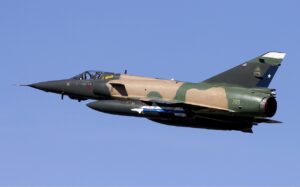 Dassault Mirage 5
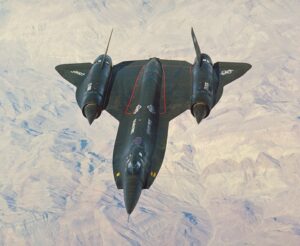 Lockheed YF-12
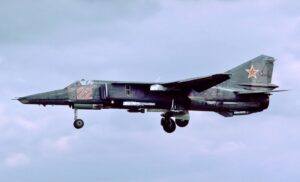 Mikoyan MiG-27 Flogger-D
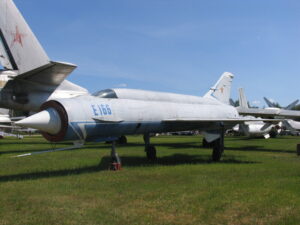 Mikoyan Ye-152 (MiG-21 variant)