From rocket-powered research aircraft to operational fighters, this guide compares ten important high-speed aircraft and the different kinds of speed figures reported for them. It is a selected set of profiles, not a complete global top-ten ranking. The X-43A’s air-breathing record and the X-15’s rocket-plane result belong to different propulsion categories; spacecraft reentry, missiles and proposed aircraft are outside this selection.
How to read the figures: a published specification, a particular flight-test result and a certified course record are different measurements. Mach number depends on local sound speed; do not turn every Mach value into mph or km/h with one sea-level multiplier. Where a source gives a linear speed, it is quoted separately. See the Mach-number guide, full speed comparison and fastest aircraft by category.
Sukhoi Su-27 Flanker — published Mach 2.35
The Su-27 Flanker is a twin-engine air-superiority fighter. The published high-altitude figure is 2,500 km/h / Mach 2.35; it is a specification, not a certified speed-course record.
McDonnell Douglas F-15 Eagle — published Mach 2.5+
The F-15 Eagle was built for air superiority, combining twin turbofan engines with a high thrust-to-weight ratio. The U.S. Air Force Test Center describes a top speed in excess of Mach 2.5. That is a published aircraft capability, not a record attempt under the same rules as the SR-71’s timed course.
MiG-31 Foxhound — published maximum 3,000 km/h
The MiG-31 Foxhound was designed for long-range interception over the Soviet Union’s large airspace. Rostec publishes a maximum speed of up to 3,000 km/h. Its twin D-30F6 engines and two-person crew support its interception mission. The figure is a published capability rather than a certified course record.
MiG-25 Foxbat — published Mach 2.83
The MiG-25 Foxbat was a high-speed interceptor and reconnaissance aircraft built around two large turbojet engines. The National Museum of the U.S. Air Force lists Mach 2.83 as its maximum speed. Reports of exceptional overspeed events should not be substituted for a normal published operating capability or a certified record.
XB-70 Valkyrie — flight-test maximum Mach 3.08
The XB-70 Valkyrie was a six-engine strategic-bomber prototype that used compression lift to help sustain high-speed flight. NASA records its highest Mach number as Mach 3.08 on April 12, 1966. Its fastest flight in mph was a different sortie: 2,020 mph on January 12, 1966. These two maxima should not be presented as a direct unit conversion. NASA XB-70 fact sheet. Only two XB-70s were built; they also supported research relevant to supersonic transports.
Bell X-2 Starbuster — flight-test result Mach 3.196
The Bell X-2 was a swept-wing research aircraft designed to explore flight beyond Mach 3. On September 27, 1956, Captain Milburn Apt reached Mach 3.196 — the first manned flight above Mach 3. Tragically, the aircraft went out of control moments later, and Apt was killed. The X-2 demonstrated both the possibility and the danger of extreme speed flight. NASA’s milestone account records Mach 3.196 and 2,094 mph for this flight; this was a flight-test result rather than the same category of timed course record used for the Blackbirds.
Lockheed YF-12 — 2,070.101 mph course record
The YF-12 was an experimental interceptor developed from the A-12. NASA records a 2,070.101 mph speed record on May 1, 1965. The three-aircraft programme did not become an operational fleet; later NASA work used the YF-12 to study sustained Mach 3 flight. NASA YF-12 history. A quoted maximum Mach specification should not be confused with this particular measured course result.
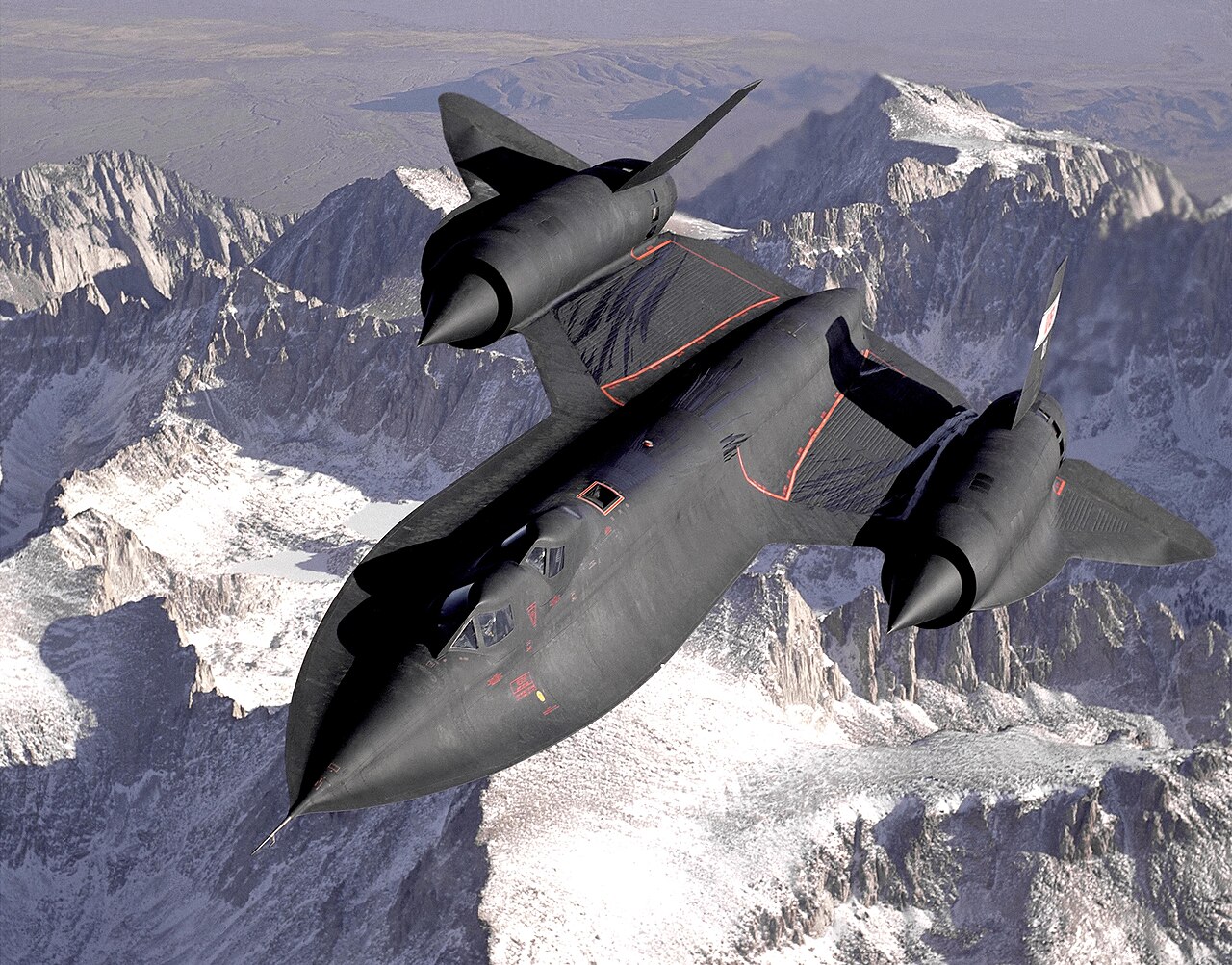
Lockheed SR-71 Blackbird — 2,193.167 mph course record
The SR-71 Blackbird combined a titanium airframe with twin J58 engines for high-altitude reconnaissance. On July 28, 1976, it set a speed record of 2,193.167 mph in its class. The National Museum of the U.S. Air Force distinguishes this record from the aircraft’s broader Mach 3+ specification. The record figure is higher than the YF-12’s 1965 course result; different quoted Mach maxima do not reverse that comparison.
North American X-15 — Mach 6.7 flight-test result
The X-15 rocket plane pushed the boundaries of human flight to the edge of space. On October 3, 1967, test pilot William “Pete” Knight reached Mach 6.7 (4,520 mph) — a crewed rocket-plane flight-test record. The X-15 also reached an altitude of 354,200 feet (67 miles), earning its pilots astronaut wings. The data gathered by the X-15 program was instrumental in developing the Space Shuttle. NASA’s X-15 programme history gives the reported speed and notes that altitude and speed maxima were achieved on different flights.
NASA X-43A — Mach 9.6 air-breathing record
The unmanned NASA X-43A reached Mach 9.6 on November 16, 2004, setting an air-breathing aircraft speed record. NASA gives its approximate linear speed as 7,000 mph (about 11,265 km/h). A hydrogen-fuelled scramjet operated after rocket-assisted acceleration. Three research vehicles were built, with two successful 2004 flights. NASA X-43A programme history. The record’s air-breathing qualification matters: it is not an unrestricted ranking including spacecraft returning from orbit.
Specifications and Flight Results at a Glance
| Aircraft | Reported speed | Basis / event | Source |
|---|---|---|---|
| Su-27 | Mach 2.35 / 2,500 km/h | Published high-altitude specification | Primary source |
| F-15 | Mach 2.5+ | Published capability | Primary source |
| MiG-31 | Up to 3,000 km/h | Published capability | Primary source |
| MiG-25 | Mach 2.83 | Museum technical specification | Primary source |
| XB-70 | Mach 3.08; 2,020 mph on a different flight | Flight-test maxima; 1966 | Primary source |
| Bell X-2 | Mach 3.196 / 2,094 mph | Flight-test result; September 27, 1956 | Primary source |
| YF-12 | 2,070.101 mph | Measured speed record; May 1, 1965 | Primary source |
| SR-71 | 2,193.167 mph | Measured speed record; July 28, 1976 | Primary source |
| X-15 | Mach 6.7 / 4,520 mph | Rocket-plane flight result; October 3, 1967 | Primary source |
| X-43A | Mach 9.6 / approximately 7,000 mph | Air-breathing flight result; November 16, 2004 | Primary source |
Other Aircraft and Future Concepts
This selection is not exhaustive. The X-51A Waverider, for example, reached Mach 5.1 on May 1, 2013, according to the U.S. Air Force. That demonstrated result belongs in any broader discussion of fast air-breathing aircraft, even though it was missing from the original ten-profile article.
Proposals such as the SR-72 have design targets, not interchangeable flight records. For a broader catalogue, use the speed comparison with data-basis labels or select a propulsion and operating category in fastest aircraft by category.
Correction scope: the comparison method, conflicting rankings, selected speed figures and their sources. The original aircraft selection is retained; this article no longer claims an exhaustive world top ten.